
AT A GLANCE
- Subject: Ammonium Carbonate (CAS No. 506-87-6)
- Why it matters to buyers: A traditional leavening agent and lab/industrial reagent that decomposes cleanly into gas on heating, leaving no residue behind
- Key regulations: FDA GRAS status under 21 CFR 184.1137 for food use as a leavening and pH control agent
- Grades Allan Chemical stocks: ACS, FCC
What is Ammonium Carbonate used for? Ammonium Carbonate (CAS 506-87-6) is best known as a traditional leavening agent in thin, dry baked goods like cookies and crackers, where it decomposes completely into ammonia, carbon dioxide, and water — leaving no residue the way mineral-based leaveners can. It’s also a standard laboratory reagent for buffering and synthesis work. Allan Chemical stocks it in FCC grade for food applications and ACS grade for laboratory use, with a Certificate of Analysis and SDS on every shipment.
What Ammonium Carbonate Is, Chemically
Ammonium Carbonate has the formula (NH4)2CO3 and a molecular weight of about 96.09 g/mol.[1] It’s historically known by older names — baker’s ammonia, hartshorn, sal volatile — from its original production by dry-distilling nitrogenous animal material, though today it’s manufactured synthetically. One precise detail worth knowing: the material sold commercially as “ammonium carbonate” is technically a mixture of ammonium bicarbonate and ammonium carbamate rather than the pure compound, since the pure salt is unstable at room temperature and readily converts to this mixture. The FDA’s own food-grade regulation registers this commercial mixture under its own CAS number, 8000-73-5, distinct from the CAS number for the pure compound.[2]
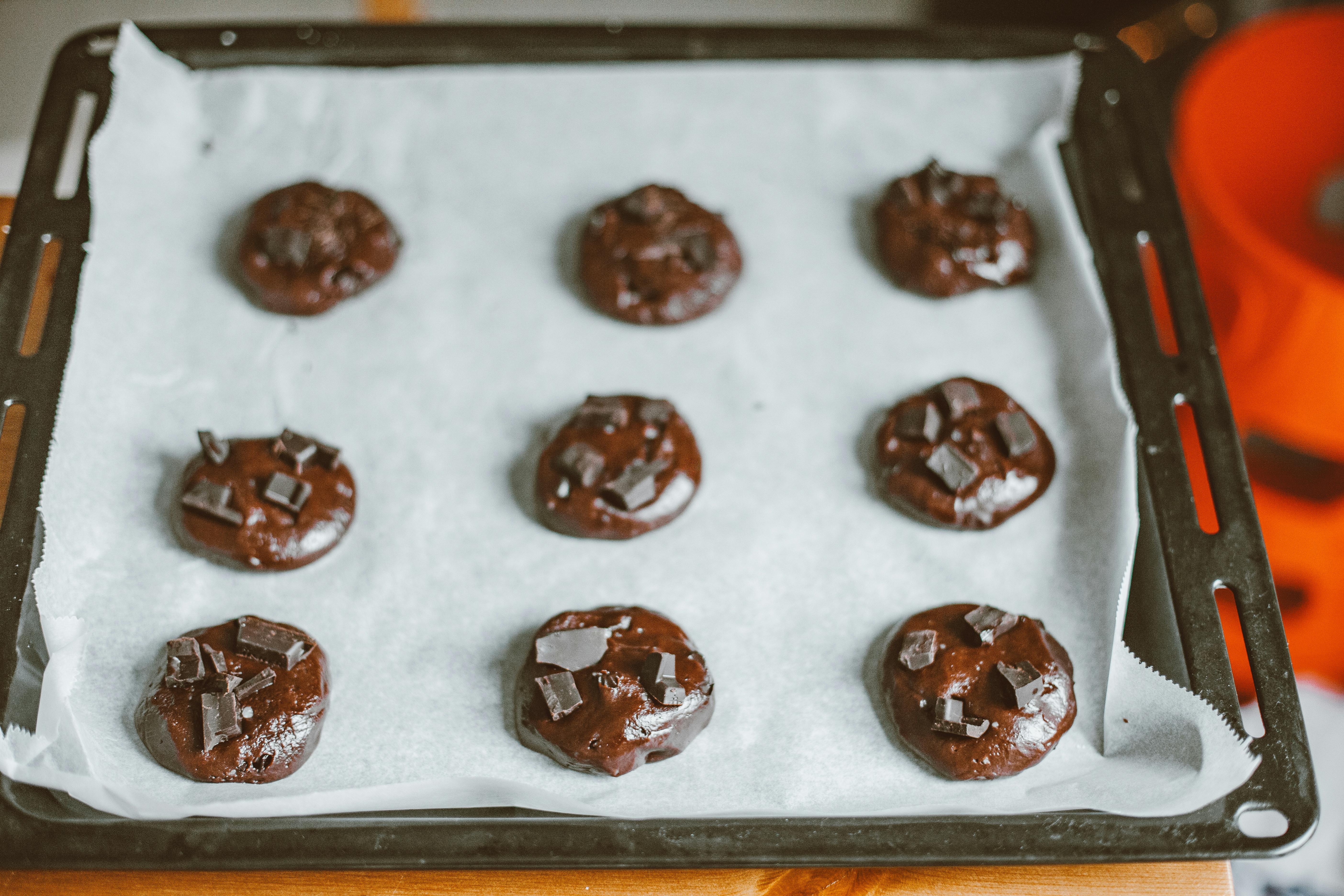
Photo by Roman Odintsov on Pexels
Why It Works as a Leavening Agent
When heated, Ammonium Carbonate decomposes entirely into gaseous ammonia, carbon dioxide, and water vapor. That complete gaseous breakdown is the whole story: the released gases create the porous structure inside a cookie or cracker, and because nothing solid is left behind, there’s no aftertaste or residue the way there can be with baking soda in a thick, moist product. This is exactly why it’s largely confined to thin, low-moisture baked goods — anything thick enough to trap the ammonia gas before it escapes will carry an unpleasant ammonia taste, which is also why it never replaced baking soda in cakes and breads.
Regulatory Status and Food Use
Ammonium Carbonate is affirmed GRAS (Generally Recognized As Safe) under 21 CFR 184.1137, specifically for use as a leavening agent and a pH control agent, at levels not exceeding current good manufacturing practice.[2] In the EU, it carries the food additive number E503(i) under the acidity regulator category. For laboratory and industrial applications outside food, ACS reagent grade is the relevant specification — tested for assay and impurity limits rather than food-safety criteria.
Laboratory and Industrial Applications
Outside the bakery, ACS-grade material is a standard reagent for buffering solutions, as a source of ammonia in synthesis work, and in the preparation of certain metal complexes. Because it decomposes cleanly under heat, it’s also used as a porogen — a compound added to a formulation specifically to create pores as it burns or sublimates away during processing.
Photo by Towfiqu barbhuiya on Pexels
Grade Comparison
| Grade | Primary Application | Governing Standard |
|---|---|---|
| FCC | Food leavening, pH control | Food Chemicals Codex |
| ACS | Laboratory, analytical, reagent use | American Chemical Society reagent specification |
What to Verify Before Sourcing It
- COA matched to the intended grade — FCC for food production, ACS for lab or reagent use.
- Current SDS on file, since the material releases ammonia and requires ventilated storage.
- Sealed original containers — because the compound is inherently volatile and reactive with air, an already-opened or repackaged container is far more likely to have drifted off its labeled assay.
For more on how FCC and ACS grades differ across chemicals generally, see our guide to choosing the right chemical grade for lab applications.
Sourcing Ammonium Carbonate?
Allan Chemical stocks it in FCC and ACS grades, in original sealed manufacturer containers, with a Certificate of Analysis and SDS included on every shipment.
View Ammonium Carbonate at Allan ChemicalOr call (973) 962-4014 | info@allanchem.com
FAQs
Is Ammonium Carbonate the same as baking soda?
No. Baking soda is sodium bicarbonate, a different compound that leaves a solid residue (sodium carbonate) behind after reacting. Ammonium Carbonate decomposes entirely into gas, which is why it suits thin, dry baked goods but not thick or moist ones.
Why does Ammonium Carbonate smell like ammonia?
Because it releases ammonia gas as it slowly decomposes even at room temperature, which is also why it should be stored in a tightly sealed container in a cool, ventilated area.
Can Ammonium Carbonate be used in cakes or bread?
It’s generally unsuitable for thick or moist baked goods, since the ammonia gas needs a short bake time and thin structure to fully escape — trapped ammonia in a dense product leaves an unpleasant taste.
What documentation should come with a shipment?
A Certificate of Analysis matched to the correct grade (FCC or ACS) and a current Safety Data Sheet, given the material’s volatility and ammonia release.
References
This article is for general information and is not regulatory, safety, or formulation advice. Always consult the current official regulations and qualified professionals for your specific application.




Comments are closed