
AT A GLANCE
- Subject: The reagent classes used in analytical sample preparation and how reagent quality affects results
- Why it matters to labs: Instruments can only be as accurate as the sample put into them — unsuitable reagents introduce contamination, background signal, and poor recovery
- Main reagent classes: Acids, bases, organic solvents, buffers, oxidizing and reducing agents, chelating agents, and derivatization reagents
- What to request from a supplier: Certificate of Analysis, Safety Data Sheet, specification sheet, lot information, and traceability
Sample preparation is one of the most important steps in laboratory analysis. Before a sample can be measured by chromatography, spectroscopy, titration, or elemental analysis, it often needs to be dissolved, diluted, extracted, filtered, digested, or otherwise treated. Chemical reagents sit at the center of these processes — the right reagent helps remove interfering substances, improve analyte recovery, control pH, and support reliable results. For laboratories in pharmaceuticals, food and beverage, environmental testing, chemicals, research, and industrial quality control, reagent selection is essential to accurate and reproducible analysis.
What Is Sample Preparation?
Sample preparation refers to the series of steps performed to convert a raw sample into a form suitable for analytical measurement. Depending on the sample and technique, this may involve dissolution, dilution, extraction, filtration, digestion, hydrolysis, derivatization, pH adjustment, separation of interfering compounds, or concentration of analytes. A solid sample may need to be dissolved before analysis, while a biological or environmental sample may require extraction to isolate the compound of interest. Chemical reagents are used throughout these steps to make the target analyte easier to detect and quantify.
Why Chemical Reagents Are Important in Analysis
Analytical instruments can provide highly precise measurements, but the quality of the final result also depends heavily on sample preparation. Poor-quality or unsuitable reagents can introduce contaminants, interfere with reactions, shift pH, or produce background signals. Appropriately specified reagents help laboratories achieve better analyte recovery, improved measurement accuracy, consistent sample preparation, reduced contamination, better reproducibility, lower analytical background, and more reliable quality-control results. Reagent selection should therefore be treated as an integral part of the analytical method rather than a supporting laboratory activity.
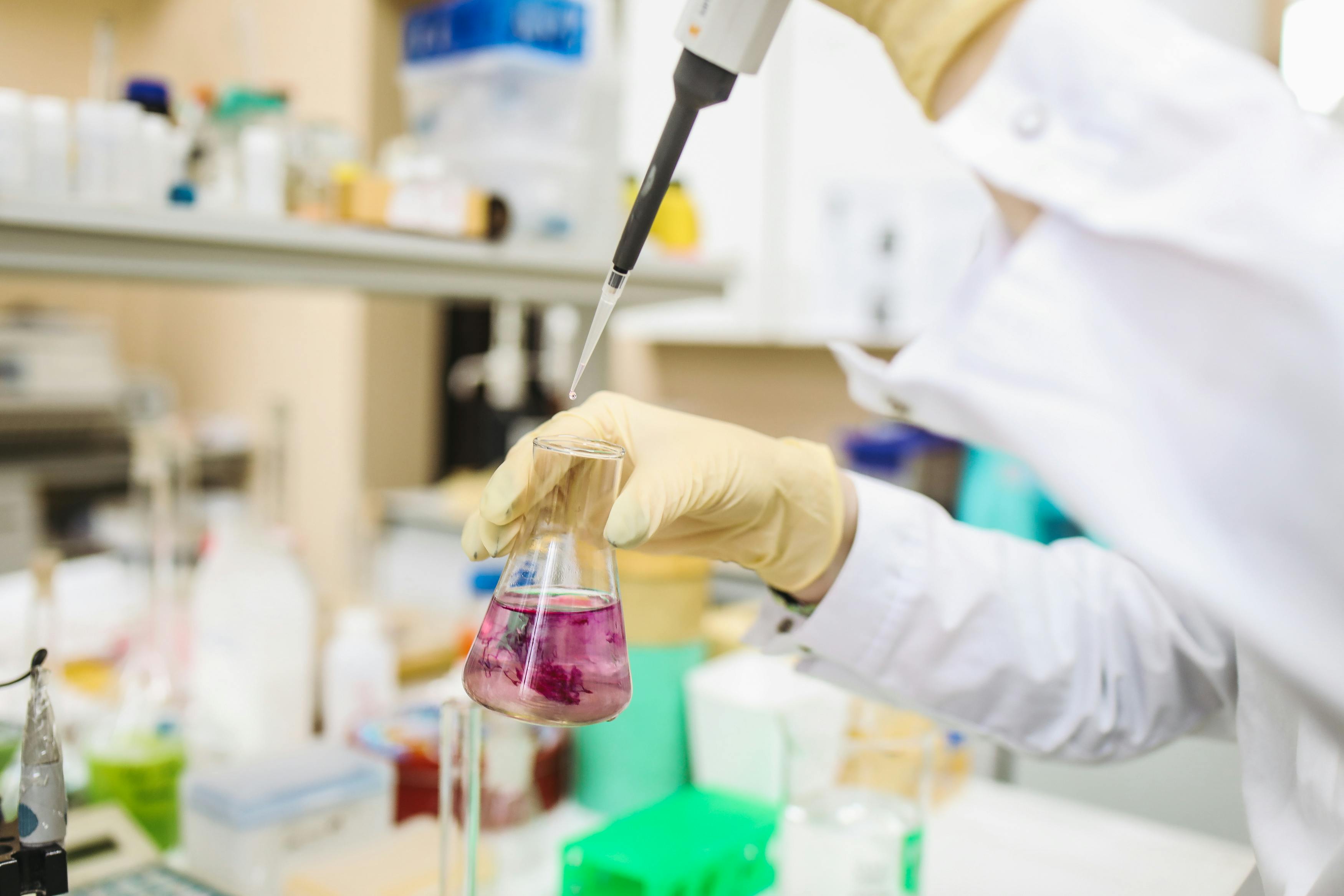
Photo by Polina Tankilevitch on Pexels
Common Types of Chemical Reagents
Different analytical procedures require different classes of chemicals, and most laboratories keep several of these categories on hand at once.
| Reagent Type | Typical Function | Common Applications |
|---|---|---|
| Acids | Dissolution, digestion, pH adjustment | Elemental analysis, titration |
| Bases | Neutralization, pH adjustment, hydrolysis | Sample treatment, titration |
| Organic solvents | Extraction and dissolution | Chromatography, spectroscopy |
| Buffers | Maintaining stable pH | HPLC, biochemical analysis |
| Oxidizing agents | Oxidation and digestion | Environmental and chemical analysis |
| Reducing agents | Reduction reactions | Redox analysis |
| Chelating agents | Metal-ion complexation | Elemental and analytical chemistry |
| Precipitating reagents | Separation or concentration | Gravimetric and wet analysis |
| Derivatization reagents | Improve detectability or separation | Chromatography |
| Drying agents | Remove moisture | Organic sample preparation |
The specific reagent required depends on the sample matrix, target analyte, analytical technique, and validated laboratory method. Our overview of the essential chemical reagents used in laboratory research covers these categories in a broader research context.
Acids Used for Sample Preparation
Acids are among the most widely used reagents in analytical laboratories. They help dissolve materials, break down sample matrices, adjust pH, and release elements or compounds from complex samples.
Hydrochloric acid (HCl) is widely used for acidification, dissolution, digestion, and pH adjustment. Nitric acid (HNO3) is common in sample digestion and elemental analysis because it can break down organic matrices and solubilize many metals. Sulfuric acid (H2SO4) is used in digestion, dehydration, acidification, and various analytical reactions, while acetic acid (CH3COOH) is a weaker acid frequently used for pH adjustment, buffer preparation, extraction procedures, and chemical analysis.
The required grade and purity of an acid depend on the analytical method. Trace-element analysis, for example, may require high-purity acids with very low levels of metal contaminants.
Bases and Alkaline Reagents
Bases are important for neutralization, pH adjustment, hydrolysis, and certain extraction procedures. Common alkaline reagents include sodium hydroxide, potassium hydroxide, ammonium hydroxide, sodium carbonate, and sodium bicarbonate.
Sodium hydroxide is commonly used to adjust sample pH and prepare alkaline solutions, and also appears in hydrolysis and titration procedures. Ammonium hydroxide can be used for pH adjustment, precipitation reactions, and complexation procedures. The concentration and purity of alkaline reagents can directly affect analytical results, particularly where pH-sensitive reactions are involved.
Organic Solvents
Organic solvents are essential in many sample preparation procedures, particularly extraction and chromatography. Common laboratory solvents include methanol, ethanol, acetonitrile, acetone, isopropanol, hexane, ethyl acetate, and dichloromethane.
Solvents may be used to dissolve organic compounds, extract analytes from sample matrices, prepare standards and solutions, wash laboratory materials, separate compounds, or serve as mobile-phase components. For chromatographic applications, solvent purity is particularly important because impurities can create background peaks, affect detector response, or reduce column performance.
Buffers and pH-Control Reagents
Many analytical methods require the sample environment to remain within a specific pH range, and buffers help maintain relatively stable pH during preparation and analysis. Common buffer components include phosphate salts, acetate systems, citrate systems, ammonium-based buffers, and carbonate or bicarbonate systems.
Buffers are widely used in HPLC, biochemical analysis, pharmaceutical testing, enzyme-related studies, general analytical chemistry, and research laboratories. Consistent buffer preparation requires accurate weighing, suitable water quality, correct concentration, and controlled pH — our laboratory calculators can help with molar concentration and dilution calculations.
Oxidizing and Reducing Agents
Oxidizing and reducing reagents are used when the chemical state of an analyte needs to be changed before measurement. Oxidizing reagents such as hydrogen peroxide, potassium permanganate, certain nitrate-based systems, and other method-specific reagents can help break down organic matter or convert compounds into forms suitable for analysis. Reducing agents such as sodium sulfite, sodium bisulfite, ascorbic acid, and sodium thiosulfate are used to convert chemical species into lower oxidation states or to prevent unwanted oxidation.
The choice of oxidizing or reducing reagent should always follow the analytical method, because different analytes respond differently to chemical treatment.
Chelating and Complexing Agents
Chelating agents interact with metal ions to form complexes, which makes them useful in separation, extraction, titration, and elemental analysis. EDTA (ethylenediaminetetraacetic acid) is widely used for complexometric titration and metal-ion determination. Citric acid interacts with metal ions and appears in a range of chemical and analytical applications, while ammonia-based systems can influence metal-ion complexation and precipitation behavior. Chelating agents are particularly useful when a method depends on controlling the availability or chemical form of metal ions.
Reagents Used in Chromatographic Analysis
Chromatography requires careful control of solvents, additives, buffers, and standards. For HPLC and related techniques, common reagents include HPLC-grade water, methanol, acetonitrile, isopropanol, buffer salts, formic acid, acetic acid, ammonium acetate, and ammonium formate.
Even small amounts of contaminants can produce unwanted peaks or increase baseline noise. High-purity solvents and reagents therefore support cleaner chromatograms, better peak resolution, improved detector performance, more reliable quantification, and better method reproducibility. The appropriate solvent grade should always match the analytical instrument and validated method.
Reagents for Spectroscopic and Elemental Analysis
Spectroscopic techniques may require reagents for digestion, dilution, chemical conversion, or calibration. Elemental techniques such as ICP-based methods commonly require carefully controlled acids and high-purity water during sample preparation.
- Dissolve the sample.
- Break down the sample matrix.
- Stabilize the analyte.
- Adjust the chemical environment.
- Reduce interference.
- Prepare calibration or reference solutions.
In trace analysis, reagent impurities can become significant because the concentration of the analyte being measured may be extremely low.
Importance of Chemical Purity
Chemical purity is one of the most important considerations when selecting reagents for analytical work. A reagent suitable for general laboratory use may not be suitable for trace analysis, chromatography, pharmaceutical testing, or other sensitive applications. Recognized specification systems such as ACS Reagent Chemicals and United States Pharmacopeia monographs define what a given grade designation actually guarantees.
| Grade | Typical Application |
|---|---|
| General Laboratory Grade | Routine laboratory procedures |
| Analytical Reagent (AR) Grade | General analytical testing |
| ACS Grade | Applications requiring recognized analytical specifications |
| HPLC Grade | High-performance liquid chromatography |
| Spectroscopy Grade | Spectroscopic applications |
| Ultrapure / Trace Analysis Grade | Sensitive trace-level analysis |
The appropriate grade should be selected based on the analytical method rather than simply choosing the highest available grade for every application — a topic covered in more depth in our guide to choosing the right chemical grade for lab applications.
How to Choose the Right Reagent
1. Analytical Method
Check the method or standard operating procedure for the specified reagent and grade.
2. Purity Requirements
Consider whether the analysis requires standard laboratory purity, analytical grade, chromatography grade, or higher-purity material.
3. Impurity Profile
Review relevant impurity specifications, particularly for trace analysis. For pharmaceutical work, ICH quality guidelines on residual solvents and elemental impurities are a useful reference point.
4. Compatibility
Ensure the reagent is compatible with the sample matrix, instrument, and analytical procedure.
5. Packaging
Suitable packaging helps protect sensitive chemicals from moisture, contamination, and degradation.
6. Documentation
For controlled laboratory environments, documentation such as a Certificate of Analysis (COA), Safety Data Sheet (SDS), batch or lot information, specification sheet, and traceability information can be important for quality assurance and recordkeeping.
Benefits of High-Quality Analytical Reagents
Using appropriately specified reagents offers several practical advantages in day-to-day laboratory work.
| Benefit | What It Supports |
|---|---|
| Improved Accuracy | Less interference with analytical measurements |
| Better Reproducibility | Repeatable sample preparation and testing |
| Reduced Background Interference | Cleaner signals in sensitive instrumental analysis |
| Improved Laboratory Efficiency | Fewer repeat tests from contamination or drift |
| Better Quality Control | More dependable QC and research workflows |
Risks of Using Low-Quality Reagents
Using unsuitable or poorly controlled reagents may result in contaminated samples, unexpected chromatographic peaks, incorrect pH, reduced analyte recovery, poor reproducibility, interference during instrumental analysis, failed quality-control tests, increased repeat testing, and higher laboratory costs. In sensitive analytical applications, even low concentrations of impurities may affect the final result.
Need reagents for your analytical method?
Allan Chemical supplies ACS, USP, NF, FCC, and other specialty grade chemicals in original sealed manufacturer containers, with a Certificate of Analysis and SDS included on every shipment.
View Lab Reagents at Allan ChemicalContact our team | Or call (973) 962-4014 | info@allanchem.com
Future Trends in Sample Preparation
Analytical laboratories are increasingly focused on methods that are faster, cleaner, and more efficient. Automated sample preparation can reduce manual variation and improve throughput, while miniaturization lowers sample and reagent volumes along with chemical consumption and waste. Laboratories are also looking for safer solvents and more environmentally responsible procedures under the banner of greener analytical chemistry. As instruments become more sensitive, high-purity reagents matter more for controlling background contamination, and digital documentation and batch tracking are improving reagent management within laboratory quality systems.
FAQs
What are chemical reagents used for in sample preparation?
Chemical reagents are used for processes such as dissolution, extraction, digestion, dilution, pH adjustment, oxidation, reduction, complexation, and derivatization.
Which acids are commonly used in analytical sample preparation?
Hydrochloric acid, nitric acid, sulfuric acid, and acetic acid are commonly used, depending on the analytical method and sample matrix.
Why is solvent purity important in HPLC?
Impurities in solvents can contribute to background signals, unwanted peaks, and other analytical interference. Suitable chromatography-grade solvents help support reliable HPLC analysis.
What is the difference between analytical-grade and HPLC-grade chemicals?
The specifications are designed for different applications. Analytical-grade reagents are generally intended for analytical laboratory procedures, while HPLC-grade solvents are specifically controlled for chromatographic applications.
Why are buffers used during analysis?
Buffers help maintain a controlled pH, which can be important for chemical reactions, analyte stability, separation, and chromatographic performance.
How do reagents affect analytical accuracy?
Reagent purity, concentration, compatibility, and consistency can influence sample preparation and therefore the accuracy and reproducibility of analytical results.
Conclusion
Chemical reagents are fundamental to reliable sample preparation and laboratory analysis. From acids and bases to organic solvents, buffers, chelating agents, and redox reagents, each chemical has a specific role in preparing samples for accurate measurement. Selecting the right reagent involves more than choosing a chemical name — laboratories must consider purity, grade, impurity profile, compatibility, documentation, packaging, and analytical requirements. As methods become increasingly sensitive, consistent and appropriately specified reagents will continue to play an important role in pharmaceutical, food, environmental, industrial, and research laboratories.
References
- American Chemical Society — ACS Reagent Chemicals: Specifications and Procedures
- USP — Compendial Standards for Chemicals and Reference Materials
- ICH — Quality Guidelines (including Q3C Residual Solvents and Q3D Elemental Impurities)
This article is for general information and is not regulatory, safety, or formulation advice. Always consult the current official regulations, the Safety Data Sheet, and qualified professionals for your specific application.




Comments are closed