
AT A GLANCE
- Subject: Chemical traceability: following a material’s identity, lot and movement from source to use
- Why traceability matters: When a lot turns out to be wrong, lot-level records let teams act on a few containers instead of everything
- The backbone: The lot number, carried unbroken from label to Certificate of Analysis (COA) to inventory and production records
- Where the chain breaks: Repackaging, relabeling and blending of lots
What is chemical traceability? Traceability is the ability to answer three questions about any container: where did this come from, what was tested on the container, and where did the rest of the lot go? The lot number is the thread that ties the answers together.
IN THIS ARTICLE
- A worked example
- The records that make traceability work
- Where can the lot link be lost?
- How we protect the link at Allan Chemical
- Improving traceability on the buyer’s side
- How much traceability do companies need?
- What poor traceability costs
- Traceability versus quality documentation
- Questions buyers ask suppliers about traceability
- What records can companies get from Allan Chemical?
- FAQs
- Related Reading
- References
A worked example
A manufacturer sees a faint discoloration in a finished batch. With lot-level records, the quality team reads the lot number off the raw material container and pulls the lot COA, which shows an iron result near its limit. The receiving log shows eight containers arrived on that lot. Production records show two went into the affected batch and three into a batch not yet shipped. Three containers remain in stock. The team quarantines those five, holds the unshipped batch and contacts the supplier, all within a day.
Without the lot number, the same team has to treat every container of that product, and every batch made since the last clean one, as suspect.
The records that make traceability work
| Record | What the record ties together |
|---|---|
| Lot number (on the label) | The container to the production run |
| Certificate of Analysis | The lot to its test results |
| Purchase order and receiving record | The lot to a supplier, a date and a quantity |
| Inventory record | The lot to a storage location and a status (quarantine, released, used) |
| Production or batch record | The lot to the finished products that consumed the lot |
| Shipping record | A finished product to its customers |
The depth needed depends on the risk. A lab ordering 500 g may only record the lot and COA, while a pharmaceutical manufacturer typically identifies every component container so the container can be traced back to its lot.
Where can the lot link be lost?
Most traceability failures are not software failures. Most happen when physical material changes hands in a way that changes its label.
- Repackaging. A drum is split into smaller containers. Each new container needs its own label and a record linking the container to the original lot, and often does not get one.
- Relabeling. A distributor’s label replaces the manufacturer’s. The original lot may survive, or an internal number may replace the lot.
- Blending. Two lots combined into one container produce material that no single COA describes.
- Transcription errors. A misread digit at receiving breaks every downstream link.
How we protect the link at Allan Chemical
Allan Chemical doesn’t repackage. Material is delivered in sealed original containers, so the lot number on the label matches the lot COA. No intermediate relabeling step exists to break the link. For how to read the certificate itself, see What Is a Certificate of Analysis (COA)? Allan Chemical is also International Organization for Standardization (ISO) 9001:2015 certified.
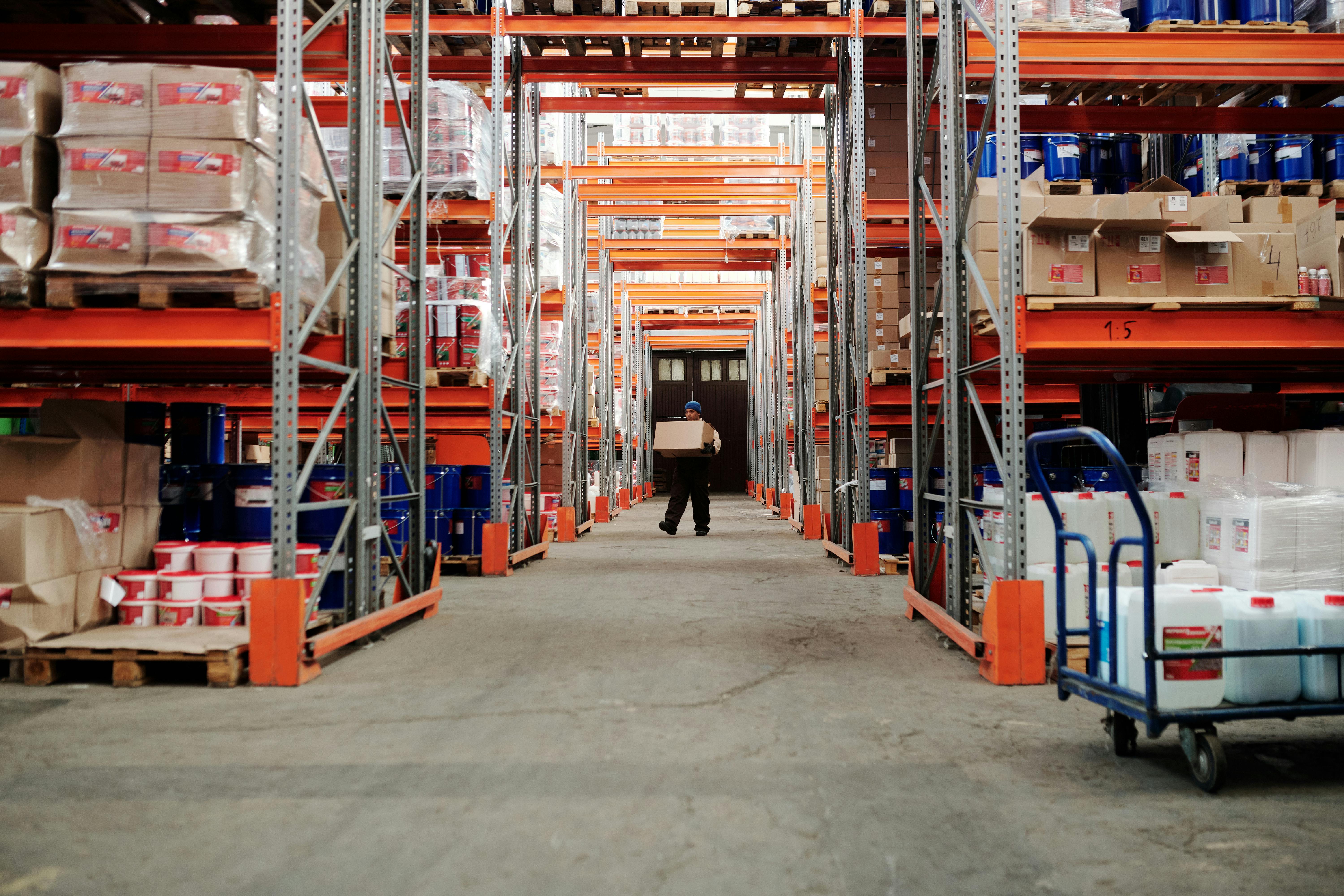
Photo by Tiger Lily on Pexels
Improving traceability on the buyer’s side
Teams with strong traceability tend to share a few habits:
- Recording the lot at receiving. The lot from the label is captured and matched against the paperwork.
- Filing the COA by lot. The certificate can be retrieved from a product and lot number alone.
- Keeping partial containers labeled. When a container is decanted, the lot and the date travel with the new container.
- Linking usage to batches. Where the risk justifies the effort, each production batch records which lot went into the batch.
- Testing the system. Picking a lot at random and timing how long the COA, the location and the use take to find reveals gaps that an audit might not.
QUICK CHECK
- Is the lot recorded at receiving?
- Can the COA be retrieved from the lot number?
- Do decanted containers carry the lot?
- Can the team list, within an hour, where a given lot was used?
Traceability and quality documents do different jobs. The lot is the link; the COA and the Safety Data Sheet (SDS) are what attach to the lot. Neither document alone shows where a material has been.
How much traceability do companies need?
| Setting | Reasonable depth |
|---|---|
| Teaching or research lab, small quantities | Lot number and COA filed with the purchase record |
| Industrial process chemical | Lot recorded at receiving, linked to storage location and to production batches |
| Food, pharmaceutical or other regulated product | Full chain from lot to finished-product batch and customer, with defined retention periods |
| Higher-consequence material, such as Lead Compounds (see the Lead Nitrate listing) | Container-level tracking tied to lot and COA |

Photo by WinSon 5293 on Pexels
What poor traceability costs
- Wider holds. Without knowing which containers belong to a suspect lot, a team holds them all.
- Slow investigations. Staff spend days rebuilding receiving and usage records from paper.
- Weak supplier conversations. A complaint without a lot number gets a generic reply; one with a lot number gets an investigation.
- Audit findings. Auditors usually test the chain by picking a finished batch and asking the team to walk back to the raw-material lots.
Software helps only when the underlying records are right. A barcode system that scans an incorrectly transcribed lot number will track the wrong lot very efficiently.
Traceability versus quality documentation
| Traceability | Quality documentation | |
|---|---|---|
| Question answered | Where did this come from and where did the lot go? | What is this material and is the material in specification? |
| Typical records | Lot numbers, receiving, inventory and usage logs | COA, specification, SDS |
| Main benefit | Narrows investigations to the affected material | Shows the material met its limits |
A COA alone doesn’t give supply chain traceability, and a lot number without a COA doesn’t show what the lot contained. Both are needed, tied together by the lot.
Questions buyers ask suppliers about traceability
- Is the lot number on the container assigned by the manufacturer or by the supplier?
- Does the supplier repackage, split or relabel? If so, how is the original lot recorded?
- Can the supplier identify which other customers received the same lot, if a problem is found?
- How long does the supplier retain records for a lot after shipping?
What records can companies get from Allan Chemical?
Because Allan Chemical ships sealed original containers, the lot number on the label is the lot number on the paperwork. Ask us for the lot COA and the SDS for the product being purchased. When a system needs to capture a lot number before the shipment arrives, mention that when ordering. Contact Us, browse by category, such as Laboratory Reagents, Biochemicals, Catalysts & R&D, or see all products.
FAQs
What is chemical traceability?
The ability to follow a chemical product’s identity, lot, source and movement from manufacturer to final use, using records linked by a lot number.
What is a lot number?
An identifier for a defined quantity produced under the same conditions. A lot number separates one production run from another even when the product name and grade are the same.
What is the difference between a COA and traceability?
A COA reports test results for a lot. Traceability connects that lot to the container, the shipment, the inventory record and, where tracked, the batch the lot was used in.
Does traceability prevent contamination?
No. Traceability limits the impact by showing which material and which products are affected, so a few containers are quarantined rather than a warehouse.
What breaks traceability?
Repackaging, relabeling, blending lots and consolidating containers. Each step can sever the link between the label and the lot records.
Does Allan Chemical keep lot traceability?
Yes. Allan Chemical ships sealed original containers without repackaging, so the lot number on the label stays linked to the lot COA.
Whose job is traceability, the supplier’s or the buyer’s?
Both. The supplier keeps the link between the container and the lot. Buyers keep the receiving, storage and usage records that carry the lot through their own site.
How long do companies keep lot records?
The period is set by the quality system and by any requirement that applies to the product. As a floor, many teams keep records as long as the material or the products made from the material are in circulation.
What records do buyers typically keep?
Product and grade, manufacturer lot, supplier, receipt date and quantity, the lot COA, storage location, and the production batches that consumed the lot.
Questions about lot documentation?
Tell us the product you are buying and the records you need to keep. We’ll confirm what ships with the product.
Browse All Products Contact UsOr call (973) 962-4014 | Contact Us
Related Reading
- What Is a Certificate of Analysis (COA) and Why Is It Important?
- Understanding Chemical Grades: ACS, USP, FCC, and Electronic Grade
- Chemical Quality and Purity: Why They Matter in Pharmaceutical Production
- How Supplier Qualification Helps Reduce Chemical Procurement Risks
References
External sources
This article is for general information and sourcing guidance. Please consult the current official product specification and a qualified professional for your specific application.



Comments are closed