
AT A GLANCE
- Subject: Potassium Bromide (KBr, Chemical Abstracts Service (CAS) number 7758-02-3), a white, water-soluble salt and the standard matrix for transmission Fourier Transform Infrared (FTIR) pellets
- Grades Allan Chemical lists: American Chemical Society (ACS), Photo (see Understanding Chemical Grades) and United States Pharmacopeia (USP)
- Uses: Pellet basics: Per Shimadzu, a typical 13 mm pellet uses roughly 0.1–1% sample in 200–250 mg of fine KBr (Shimadzu)
- Other uses: Uses include a bromide source in synthesis and photographic chemistry, and USP grade where USP monograph compliance is required
What is Potassium Bromide used for? Mostly as the infrared-transparent matrix for FTIR sample pellets. Uses also include a bromide source for synthesis, photographic chemistry and, in USP grade, applications that require USP monograph compliance. This guide covers how companies approach KBr pellets, what labs see when a pellet goes wrong, and which grade fits which job. Allan Chemical lists KBr in ACS, Photo and USP grades on the Potassium Bromide product page.
IN THIS ARTICLE
- Why does KBr work for FTIR?
- How are companies making a KBr pellet for FTIR?
- KBr pellet or Attenuated Total Reflectance (ATR)?
- Key properties
- ACS, Photo and USP: which grade?
- Other uses in brief
- What buyers often confirm before ordering
- Why buy Potassium Bromide from Allan Chemical?
- Frequently Asked Questions
- References
Why does KBr work for FTIR?
KBr is transparent across the mid-infrared, roughly 4000 to 400 cm⁻¹, and the salt is soft enough to flow under pressure into a clear disc. Mixed with a small amount of ground sample, Potassium Bromide lets the beam pass through the sample without adding peaks of its own.
The weak point is water. KBr is hygroscopic, and absorbed moisture produces a broad O–H band near 3400 cm⁻¹ and a bend near 1640 cm⁻¹ that can bury real sample peaks. Nearly every pellet problem comes back to water or particle size.

Photo via Pexels
How are companies making a KBr pellet for FTIR?
Per Shimadzu, a typical 13 mm pellet uses roughly 0.1–1% sample mixed into 200–250 mg of fine KBr, with a pellet of KBr alone collected as the background to correct for scattering losses and moisture on the KBr (Shimadzu). The University of Washington describes a common mixture of 1–2 mg of sample with 200–300 mg of KBr (University of Washington). Across sources, labs dry the KBr, grind sample and KBr finely together, and press the mixture in a die; a good pellet comes out clear or slightly translucent.
EXPLAINER VIDEO
How to Make a Good KBr Pellet: a Step-by-Step Guide (Specac)
A short third-party video showing the pellet workflow from powder to press.
| What labs see | Likely cause |
|---|---|
| Cloudy or opaque pellet | Moisture, coarse grinding or low pressure |
| Broad bands near 3400 and 1640 cm⁻¹ | Water in the KBr or the sample |
| Sloping baseline | Particles that are too large |
| Flat-topped strong peaks | Too much sample |
| Sharp doublet near 2350 cm⁻¹ | Atmospheric CO₂ |
One chemistry caveat: some samples can interact with the halide matrix under pressure and change the spectrum, which is one reason labs keep a second halide matrix or ATR in the toolbox.
KBr pellet or Attenuated Total Reflectance (ATR)?
ATR needs no pellet prep and is the default in many labs now. Pellets still earn their place for matching against transmission-spectra libraries, seeing weak bands, and measuring samples that make poor contact with an ATR crystal.
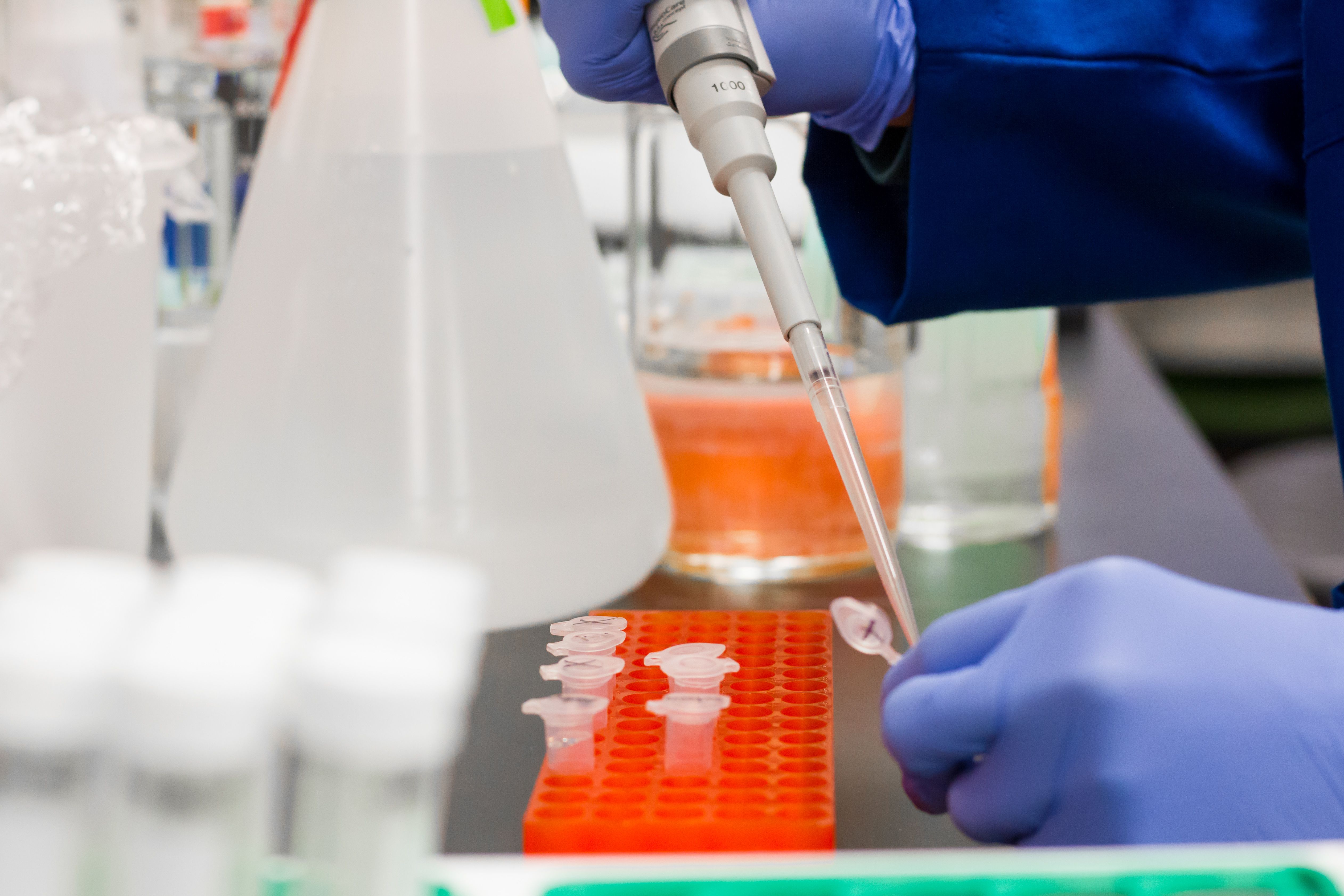
Photo via Pexels
Key properties
| Property | Value |
|---|---|
| Formula / CAS | KBr / 7758-02-3 |
| Molecular weight | 119.00 g/mol |
| Appearance | White crystalline solid |
| Behavior in air | Picks up moisture, which is why FTIR use calls for dry KBr |
Identifiers from PubChem. Solubility and other values appear on the lot Certificate of Analysis (COA) and the Safety Data Sheet (SDS).
ACS, Photo and USP: which grade?
| Grade | Typical use | What to check on the COA |
|---|---|---|
| ACS | Laboratory and analytical work, including routine FTIR pellets | Assay, insoluble matter, and any moisture or loss-on-drying value |
| Photo (grade overview) | Photographic chemistry, such as silver bromide emulsions and developer restrainers | That the spec fits the process; Photo grade does not automatically replace ACS for analytical work |
| USP | Applications that require USP monograph compliance | USP monograph compliance for the lot |
A lab reagent is not a substitute for USP grade in a regulated product, and a photo grade is not automatically an analytical grade. Matching the grade to the method, then reading the lot COA against the grade’s specification, keeps results consistent. Related lab materials are in Laboratory Reagents, Biochemicals, Catalysts & R&D.
Other uses in brief
Uses include a bromide source, where KBr is a convenient water-soluble starting point for making other bromide compounds. In photographic chemistry, bromide supplies the halide for Silver Bromide emulsions and acts as a restrainer in developers, which is the use behind the Photo grade. The PubChem record gives general background.
What buyers often confirm before ordering
- Grade: ACS for routine lab and FTIR work, USP for pharmaceutical use, Photo for photographic processes.
- Lot COA: assay and impurity limits, plus moisture where the method is sensitive to water.
- Packaging: a sealed original container limits moisture pickup before opening.
- SDS: the current version for the product received.
Why buy Potassium Bromide from Allan Chemical?
Allan Chemical has supplied specialty chemicals since 1984 and is International Organization for Standardization (ISO) 9001:2015 certified. KBr ships in the original sealed container without repackaging, so the lot on the label matches the lot COA and the powder has not been through an extra transfer in open air. See how to read a COA and why lot traceability matters.
Frequently Asked Questions
Why do labs dry KBr before making a pellet?
KBr is hygroscopic, and absorbed water shows up as broad bands near 3400 and 1640 cm⁻¹ that can hide sample peaks. Drying the KBr beforehand is a common step in transmission FTIR work.
How can labs tell whether KBr has picked up water?
A pellet of KBr alone, run as a blank, shows broad bands near 3400 and 1640 cm⁻¹ when moisture is present.
Can ACS grade Potassium Bromide be used for FTIR pellets?
ACS grade is commonly used for routine pellet work. Allan Chemical does not list a separate infrared (IR) grade. When a method calls for a certified IR-transmission specification, Contact Us before ordering.
Which grades of Potassium Bromide does Allan Chemical list?
ACS, Photo and USP. The product page shows current grades and sizes.
What is the CAS number and molecular weight of Potassium Bromide?
CAS 7758-02-3, formula KBr, molecular weight about 119.00 g/mol.
Why buy Potassium Bromide from Allan Chemical?
Allan Chemical has supplied specialty chemicals since 1984, is ISO 9001:2015 certified, and ships sealed original containers without repackaging, so the powder has not been through an extra transfer in open air and the lot number on the label matches the lot COA. Contact Us for a quote.
Sourcing Potassium Bromide?
Allan Chemical lists Potassium Bromide (CAS 7758-02-3) in ACS, Photo and USP grades. Ask for the specification, lot COA and SDS for your application.
View Potassium Bromide Contact UsOr call (973) 962-4014 | Contact Us
References
Allan Chemical resources
- Allan Chemical: Potassium Bromide
- Allan Chemical: Laboratory Reagents, Biochemicals, Catalysts & R&D
- What Is a Certificate of Analysis (COA)?
- What Is Chemical Traceability?
External sources
- PubChem: Potassium Bromide compound summary
- Shimadzu: FTIR Talk Letter, sample preparation (KBr pellet method)
- University of Washington Chemistry: KBr pellet press operating instructions
- Specac: How to Make a Good KBr Pellet (video)
This article is for general information and sourcing guidance. Please consult the current official product specification and a qualified professional for your specific application.



Comments are closed