
AT A GLANCE
- Subject: Chemical grade selection for laboratory applications (Technical, ACS, USP/NF, and related grades)
- Why it matters to buyers: The wrong grade either introduces impurities that interfere with results, or wastes money buying purity a routine task doesn’t need
- Key regulations: ACS Reagent Chemicals specifications from the American Chemical Society; USP-NF compendial requirements for pharmaceutical-adjacent lab work
- Grades Allan Chemical stocks: Varies by product — commonly ACS, USP, NF, FCC, and EP across the catalog
Which chemical grade should a laboratory use? There’s no single correct grade — the right one depends on how sensitive the procedure is to impurities. ACS reagent grade is the standard for most analytical chemistry, USP or NF grade matters when compendial compliance is required, and technical grade is appropriate for non-critical tasks like equipment cleaning where tight impurity limits add cost without adding value.
What “Grade” Actually Specifies
A chemical grade is a quality classification tied to a specific published standard — it defines expected purity, impurity limits, and the testing methods used to verify both. The American Chemical Society’s Committee on Analytical Reagents publishes and maintains the specifications behind “ACS Reagent Grade,” covering purity and impurity thresholds for several hundred of the most common laboratory chemicals, freely accessible through ACS’s own publication.[1] USP and NF grades are tied instead to United States Pharmacopeia and National Formulary compendial requirements, each with its own published reference standards and testing procedures that a lab or manufacturer must use to verify a lot’s identity and purity.[2]

Photo by Polina Tankilevitch on Pexels
How Purity Claims Get Verified
A grade specification is only as good as the testing behind it. For the highest-stakes analytical work, laboratories calibrate their own methods against NIST Standard Reference Materials — certified reference materials with metrological traceability back to internationally recognized measurement standards, maintained by the National Institute of Standards and Technology.[3] A supplier’s Certificate of Analysis for a given lot is what connects that traceability chain to the actual material in hand, which is why the COA matters as much as the grade name on the label.
A Real Example: One Chemical, Three Grades
Citric Acid Anhydrous is a useful illustration because Allan Chemical stocks it in USP, FCC, and ACS grades simultaneously — same CAS number, same molecule, three different sets of testing and documentation behind each lot. A pharmaceutical formulator needs the USP-grade certificate specifically; a food manufacturer needs FCC; an analytical lab running a titration needs ACS. Buying whichever grade happens to be cheapest that week, rather than the one the application actually calls for, is exactly the mistake grade specifications exist to prevent.
Common Grades and Where They Fit
| Grade | Best Suited For | Governing Standard |
|---|---|---|
| Technical | Cleaning, non-critical industrial processing | Manufacturer specification, no compendial requirement |
| ACS Reagent | Analytical chemistry, quantitative testing, research | ACS Committee on Analytical Reagents |
| USP / NF | Pharmaceutical and compendial-regulated applications | United States Pharmacopeia / National Formulary |
| FCC | Food-related laboratory and QC work | Food Chemicals Codex |
Why Overbuying Purity Is Its Own Mistake
The instinct to “just buy the highest grade available” is understandable but usually wrong. ACS grade routinely costs more than technical grade for the same chemical, and that premium buys impurity testing and documentation a routine cleaning or dissolving task will never use. The better approach is matching grade to the actual sensitivity of the procedure — reserving the highest, most expensive grades for the analytical work that genuinely depends on them.
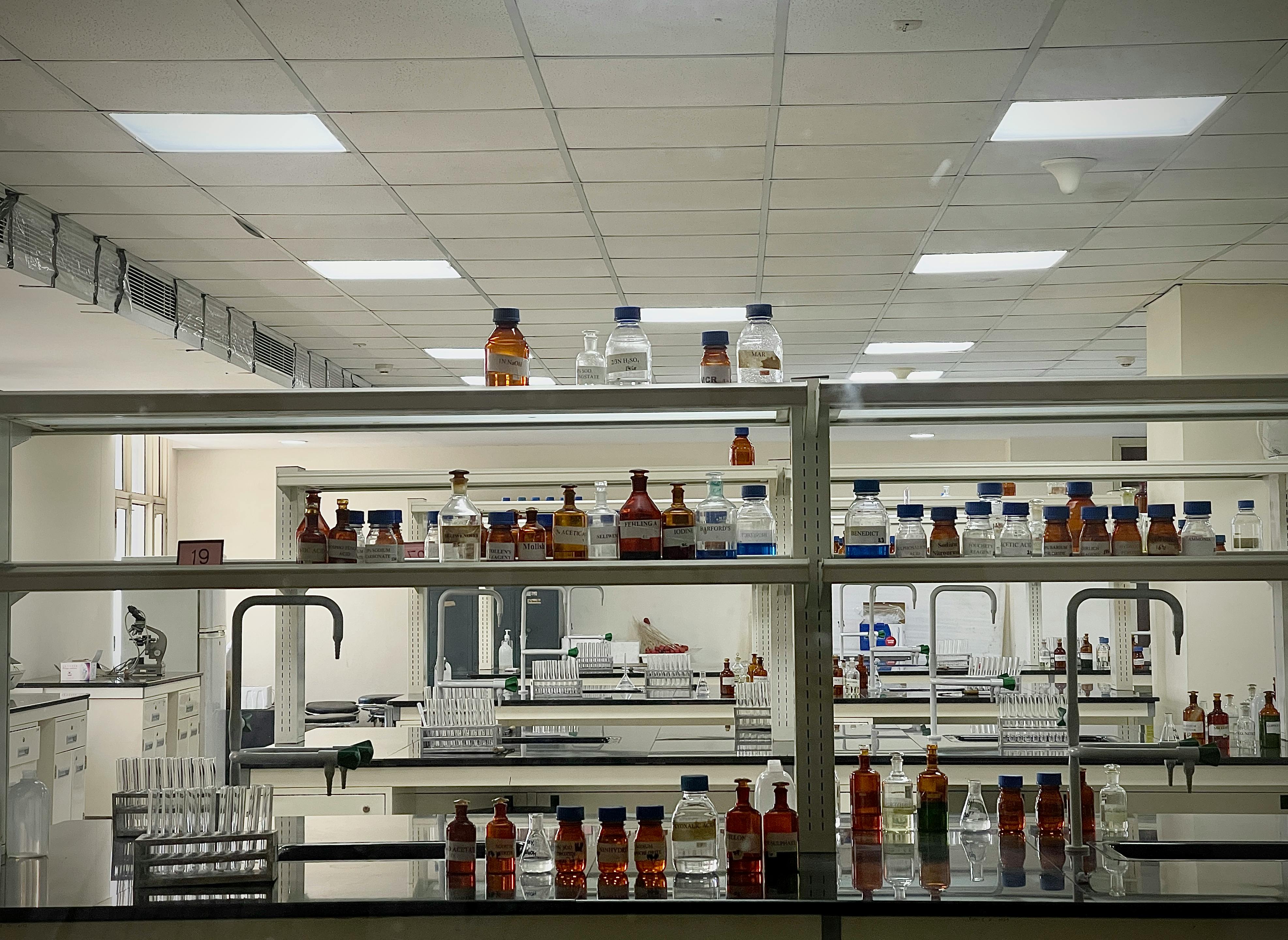
Photo by Nishant Aneja on Pexels
A Second Example: When Only One Grade Is Available
Not every chemical is stocked across every grade, and that itself is useful information. Ammonium Oxalate is stocked in ACS grade only — appropriate, since its dominant use is analytical (precipitating and complexing metal ions), and there’s no meaningful food or pharmaceutical-grade market for it. When a supplier only offers one grade, that’s usually a signal about the chemical’s real-world use pattern, not a limitation to work around.
What to Verify Before Ordering
- Which grade the specific procedure or regulation actually requires — check the method documentation rather than assuming.
- A Certificate of Analysis matched to that grade, with batch-specific impurity data.
- Whether a lower, less expensive grade would perform identically for non-critical steps like rinsing or general dissolving.
For grade guidance specific to food-contact applications, see common chemicals in food & beverage manufacturing; for a worked example involving a food-grade leavening agent, see our Ammonium Carbonate guide.
Need a specific chemical grade for your lab?
Allan Chemical stocks ACS, USP, NF, and FCC grade reagents in original sealed manufacturer containers, with a Certificate of Analysis and SDS included on every shipment.
View Lab Reagents at Allan ChemicalOr call (973) 962-4014 | info@allanchem.com
FAQs
What’s the difference between ACS grade and reagent grade?
“Reagent grade” is a general term that doesn’t guarantee a specific published standard. “ACS Reagent Grade” specifically means the material meets the American Chemical Society’s published purity and impurity specifications for that compound.
Is USP grade the same as pharmaceutical grade?
USP (United States Pharmacopeia) and NF (National Formulary) grades are the specific compendial standards behind what’s commonly called “pharmaceutical grade” in the US — USP covers drug substances, NF covers pharmaceutical excipients.
Should I always buy the highest available grade?
No. Matching grade to the actual sensitivity of the application avoids both analytical interference from an under-graded chemical and unnecessary cost from an over-graded one.
Why is a chemical sometimes only available in one grade?
Because demand for that chemical is concentrated in one type of application — a chemical used almost exclusively in analytical labs, for example, has little reason to also carry food or pharmaceutical-grade documentation.
References
- American Chemical Society — ACS Reagent Chemicals: Specifications and Procedures
- USP — Use and Storage of USP Reference Standards
- NIST — Standard Reference Materials Program
This article is for general information and is not regulatory, safety, or formulation advice. Always consult the current official regulations and qualified professionals for your specific application.




Comments are closed