
Viscosity adjusters are essential for creating smooth, stable, and easy-to-apply pigmented cosmetics like foundations, lipsticks, and eyeshadows. These ingredients prevent pigment settling, ensure even color distribution, and enhance the product’s texture and performance. Here’s a quick guide to five key viscosity adjusters used in cosmetic formulations:
- Isopropyl Palmitate (IPP): A lightweight liquid (CAS No. 142-91-6) that improves spreadability and pigment dispersion, commonly used in foundations and lipsticks.
- Glyceryl Stearate: A low HLB emulsifier that stabilizes oil-in-water emulsions and thickens creamy products like tinted moisturizers.
- Acrylates/C10-30 Alkyl Acrylate Crosspolymer: A polymer that creates clear gels and stabilizes pigments in high-pigment or lightweight formulations.
- Carbomers and Crosspolymers: Synthetic polymers forming strong gel networks, ideal for suspending pigments in translucent or gel-based products.
- Hydroxyethylcellulose (HEC): A cellulose-based thickener that forms clear gels and stabilizes formulations, suitable for transparent or natural-look cosmetics.
These ingredients vary in compatibility, texture effects, and processing requirements. Selecting the right adjuster depends on your formulation needs, whether it’s a lightweight feel, creamy consistency, or pigment stabilization.
Quick Comparison
| Ingredient | Key Features | Best Applications |
|---|---|---|
| Isopropyl Palmitate (IPP) | Lightweight, improves spreadability | Foundations, lipsticks |
| Glyceryl Stearate | Stabilizes emulsions, thickens textures | Creams, tinted moisturizers |
| Acrylates Crosspolymer | Creates clear gels, stabilizes pigments | High-pigment, lightweight products |
| Carbomers | Strong thickening, suspends pigments | Gel-based, translucent cosmetics |
| Hydroxyethylcellulose | Natural-based, forms clear gels | Transparent or natural-look products |
Each adjuster offers unique benefits for achieving the desired consistency and performance in pigmented cosmetics. Always consider formulation compatibility and processing conditions when choosing the right ingredient.
Let’s talk about viscosity in cosmetic formulations: Viscosity of emulsions
1. Isopropyl Palmitate (IPP)
Isopropyl Palmitate (IPP) is a clear, colorless liquid derived from isopropyl alcohol and palmitic acid. Nearly odorless, it plays a key role in a variety of pigmented cosmetics.
Functionality
IPP functions as both a solvent and a texture enhancer, dissolving pigments and improving the spreadability of products. It also acts as an emollient, softening the skin. As noted by SpecialChem:
"Isopropyl Palmitate can also help to enhance the spreadability of cosmetics, making them easier to apply to the skin. It is often used in foundations, lipsticks, and other makeup products." [3]
In lipsticks, IPP contributes to better stainability, especially when paired with castor oils, while also ensuring product stability. Its low viscosity allows for quick absorption and leaves behind a non-greasy finish, making it suitable for a wide range of formulations.
Compatibility with Formulation Types
Thanks to its versatility, IPP is well-suited for oil-in-water emulsions, where it enhances viscosity and aids in forming transparent oil-water gels [7][8]. It also acts as a viscosity regulator, offering flexibility in texture design. Additionally, IPP blends seamlessly with other lipids, such as Paraffinum Liquidum, giving formulators more options to craft their desired product characteristics.
For those in need of high-quality, technical-grade IPP that adheres to stringent quality and regulatory standards, sourcing options are available through specialized suppliers like Allan Chemical Corporation.
Pros
IPP offers several benefits, including excellent spreadability, a lightweight feel, and quick absorption. Its solvent properties ensure even pigment distribution, leading to consistent color payoff. Expert safety assessments confirm its stability, and regulatory bodies like the EU Cosmetics Regulation approve its use without restrictions. Additionally, PubChem classifies it as a "Green circle" chemical, indicating low toxicity.
Cons
However, IPP has been associated with comedogenic potential, which may affect acne-prone skin [4][5]. It’s recommended to test compatibility with active ingredients and perform patch tests, particularly for sensitive skin [3][6].
This content is intended for informational purposes only. Always consult official regulations and qualified professionals when making sourcing or formulation decisions.
2. Glyceryl Stearate (Cutina GMS V)
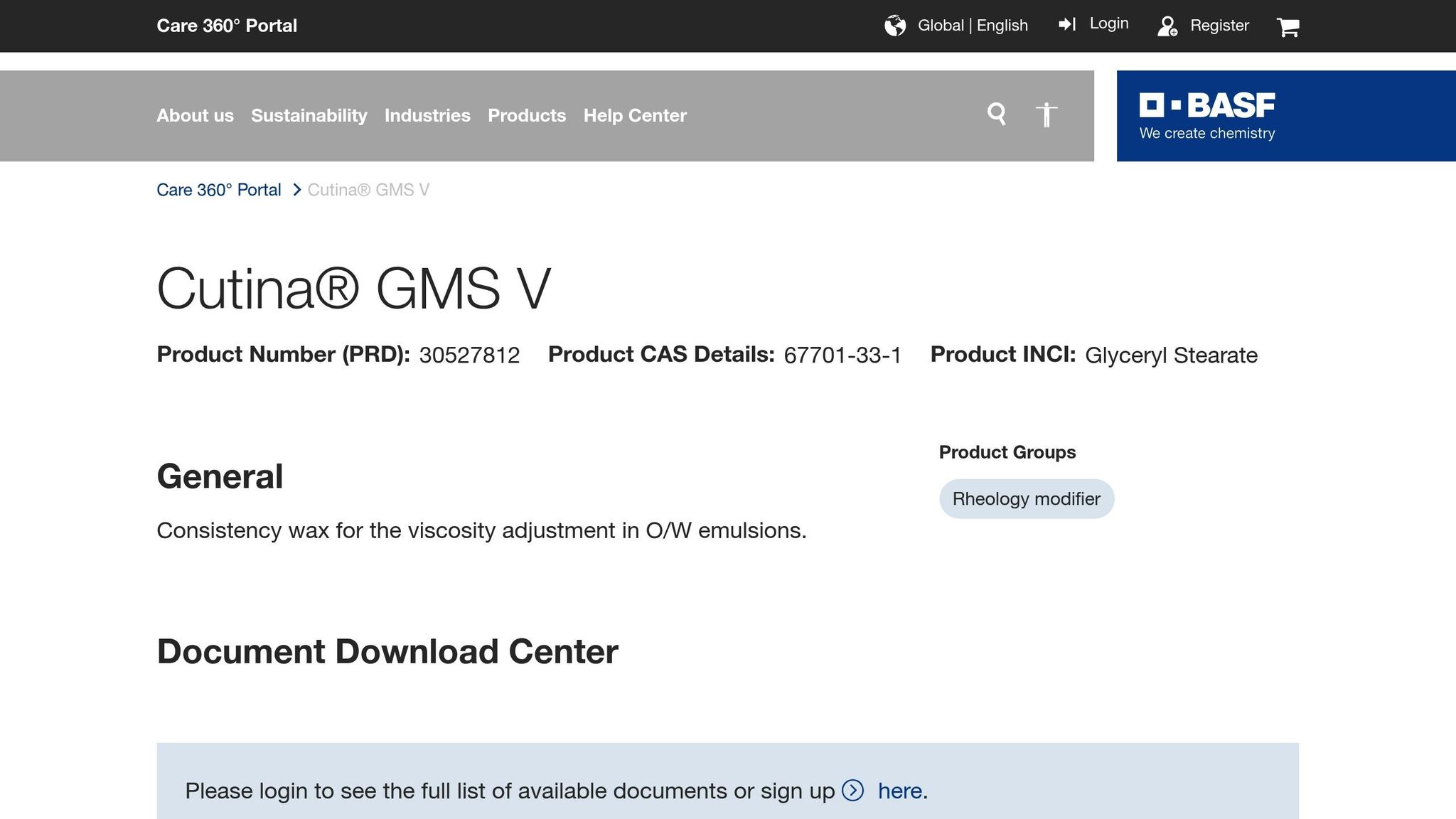
Glyceryl Stearate is a low HLB emulsifier that works in tandem with high HLB surfactants to create lamellar gel networks. These networks play a key role in thickening oil-in-water systems and stabilizing pigment suspensions. In formulations using lamellar gel network (LGN) technology, Glyceryl Stearate adjusts viscosity and enhances the stability of emulsions.
Functionality
In cosmetic formulations, Glyceryl Stearate acts as a low HLB emulsifier. When paired with a high HLB surfactant, it facilitates the formation of lamellar gel networks, which can absorb water and increase thickness. This property makes it particularly useful for suspending pigments and providing a creamy texture in products like foundations and tinted moisturizers.
Compatibility with Formulation Types
To achieve effective LGN formation, it’s crucial to maintain a 15–30% ratio of high HLB surfactant relative to the total surfactants (typically 6–8% overall). Both surfactants should have melting points above 50°C (122°F). This precise formulation balance is essential for ensuring network stability and delivering the desired performance benefits.
Advantages
- Supports the creation of stable lamellar gel networks, which thicken and stabilize emulsions.
- Enhances pigment suspension, ensuring consistent texture in finished products.
- Glyceryl Stearate that meets compendial standards is available from suppliers like Allan Chemical Corporation, providing dependable quality and compliance.
Challenges
The performance of Glyceryl Stearate in LGN-based formulations depends heavily on maintaining the correct balance with high HLB surfactants and adhering to controlled processing conditions. Any deviation in surfactant ratios or temperature during processing can compromise the stability of the network.
This information is for reference purposes only. Always consult official guidelines and qualified professionals for formulation advice.
3. Acrylates/C10-30 Alkyl Acrylate Crosspolymer (GelMaker® Powder)
Acrylates/C10-30 Alkyl Acrylate Crosspolymer is a versatile polymer with both hydrophilic (water-loving) and lipophilic (oil-loving) properties. It’s widely used in cosmetics to thicken and stabilize formulations by swelling in water and interacting with oils and emulsifiers.
Functionality
When dispersed and neutralized, this polymer creates a three-dimensional network that traps water, boosts viscosity, and stabilizes pigments by anchoring itself at the oil–water interfaces. Its ability to interact with both water and oils helps prevent phase separation while ensuring pigments stay evenly suspended. Additionally, it can create crystal-clear gels, making it ideal for transparent or translucent products like tinted gels or lightweight moisturizers.
Compatibility with Formulation Types
This polymer works well in both oil-in-water and water-in-oil emulsions, making it suitable for a range of products – from light, tinted moisturizers to rich, creamy foundations. Its ability to tolerate electrolytes and function across a broad pH range gives formulators the flexibility to stabilize pigments effectively.
Pros
- Ensures even pigment distribution, preventing color clumping or unevenness.
- Works well with co-thickeners like xanthan gum to fine-tune texture and viscosity.
- Allan Chemical Corporation offers reliable crosspolymer materials that meet rigorous cosmetic standards, supporting consistent performance and compliance.
Cons
- Requires neutralization to a pH range of 6.0–7.0 using agents like sodium hydroxide or triethanolamine for activation.
- Needs careful dispersion in water with moderate stirring to avoid clumping, as high-shear mixing can cause issues.
Next, we’ll look at another key viscosity adjuster for pigmented cosmetics.
This information is for reference purposes only. Always consult official guidelines and qualified professionals for formulation advice.
sbb-itb-aa4586a
4. Carbomers and Crosspolymers (AQUPEC Series)
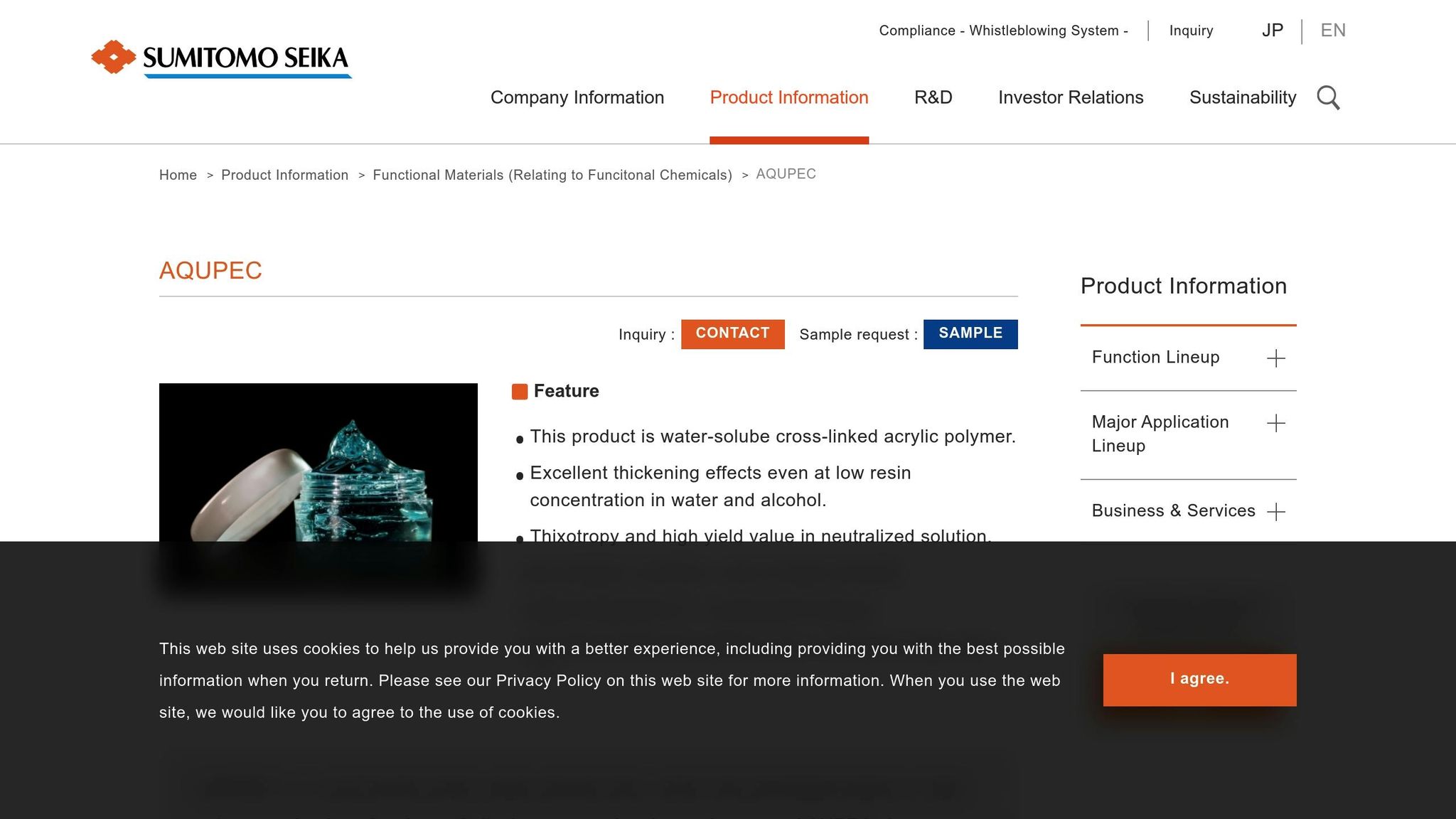
Carbomers and crosspolymers are synthetic polymers widely used in cosmetics to create strong thickening systems. These compounds, known for their high molecular weight, swell significantly when dispersed in water and neutralized. This reaction forms stable gels that effectively suspend pigments, ensuring consistent product texture. Unlike older viscosity adjusters, carbomers are particularly valued for producing crystal-clear gels, making them ideal for products like tinted serums and primers. The AQUPEC series offers a variety of these materials tailored for different cosmetic applications.
Functionality
When neutralized, carbomers form gel networks that trap water, creating a thickened matrix. This structure prevents pigments from separating and ensures even distribution, which is crucial for maintaining product quality. Their ability to produce transparent gels makes them especially useful in translucent pigmented formulations, such as tinted serums or color-correcting primers. These gels not only enhance the visual appeal but also maintain performance throughout the product’s lifecycle, from manufacturing to end use. This adaptability allows carbomers to perform well across a range of emulsion systems.
Compatibility with Formulation Types
Carbomers are highly effective in stabilizing oil-in-water (O/W) emulsions and can even support emulsifier-free oil-in-water gel formulations [22, 23]. Certain grades, like Carbopol 980, are specifically designed for high-alcohol formulations – those with over 50% ethanol or isopropanol – offering excellent viscosity and transparency, as seen in tinted hand sanitizers [10]. For surfactant-based systems, Carbopol ETD 2020 performs well in specialized shampoos, cleaning products, and high-electrolyte formulations like aloe gel [10]. Additionally, carbomers and crosspolymers are compatible with a variety of surfactant systems, including non-ionic, anionic, and amphoteric types, making them suitable for pigmented shampoos, body washes, and other cleansing products [23, 25]. However, compatibility depends on the specific grade and formulation conditions, which should be carefully evaluated.
Pros
Carbomers offer effective thickening at low concentrations, typically between 0.1% and 0.5% by weight. They maintain consistent performance across different temperatures and storage conditions. Allan Chemical Corporation provides dependable carbomer and crosspolymer materials that meet strict cosmetic standards, ensuring reliable quality for pigmented formulations. Modified carbomers, such as Carbopol 1342, Carbopol ETD 2020, and Carbopol Ultrez 20, demonstrate improved tolerance to electrolytes compared to traditional grades [23, 25]. For example, Lubrizol‘s Ultrez 30 Carbomer maintains a viscosity of 9,500–12,000 cps in a 1% dispersion with 1% sodium chloride, reflecting its superior electrolyte tolerance [9].
Cons
Neutralizing carbomers requires precision, typically using agents like sodium hydroxide, triethanolamine, or AMP. Over-neutralization can reduce both viscosity and stability. Traditional carbomers are sensitive to salts, losing viscosity in the presence of electrolytes or divalent metal salts [22, 23]. George Deckner, a Personal Care and Cosmetics Industry Expert at ULProspector.com, highlights another limitation:
"Carbomers are not compatible with cationic antiseptics like benzalkonium chloride and benzethonium chloride." [9]
This incompatibility can limit their use in formulations that rely on cationic ingredients for preservation or conditioning.
This information is intended for reference only. Always consult official guidelines and qualified professionals for formulation advice.
5. Cellulose Derivatives (e.g., Hydroxyethylcellulose)
Cellulose derivatives provide a natural way to adjust viscosity in pigmented cosmetics. Hydroxyethylcellulose (HEC), which is derived from cotton, is a water-soluble, non-ionic polymer that creates crystal-clear gels and works well in a variety of formulations.
Functionality
HEC acts as a thickening and gelling agent while stabilizing formulations by forming three-dimensional networks in water-based systems. This structure suspends pigments, preventing them from separating. Its film-forming ability and shear-thinning properties make both processing and application easier. Additionally, HEC helps prevent pigments from clumping, ensuring the product remains smooth and consistent over time.
Compatibility with Formulation Types
Thanks to its non-ionic nature and wide pH range compatibility (approximately 3–10), HEC is highly versatile. It works well in systems containing anionic and cationic surfactants, oils, and active ingredients. In oil-in-water emulsions, cellulose derivatives can sometimes replace traditional surfactants, offering a gentler alternative for sensitive skin. HEC also performs effectively in hydro-alcoholic systems with up to 60% ethanol, making it suitable for products like tinted hand sanitizers and alcohol-based foundations. In gel-based cosmetics, it preserves transparency, allowing pigments to remain visible. Its tolerance to cationic charges also enables the inclusion of mineral pigments and electrolyte-sensitive ingredients without a significant drop in viscosity.
Pros
HEC brings several benefits to pigmented cosmetic formulations. It efficiently adjusts viscosity at low concentrations (0.1–2.5%), achieving the desired consistency without overburdening the formula. Since it’s sourced from renewable cotton cellulose, it appeals to brands focused on sustainability. HEC also enhances texture by improving spreadability and absorption, while contributing to the long-term stability of the product. Allan Chemical Corporation offers high-quality cellulose derivatives that meet strict cosmetic standards, ensuring consistent results in pigmented formulations. Additionally, specialized R-grade versions simplify the manufacturing process by reducing lumping during hydration.
Cons
Despite its strengths, HEC requires careful handling in formulations. Hydration times can range from 4 to 25 minutes depending on water temperature and pH. Improper conditions – like high heat or mismatched pH – can lead to lumping. Standard grades need to be dispersed slowly into room-temperature water with neutral pH and sufficient mixing to avoid clumping, though R-grade materials help minimize this issue. Since HEC is water-soluble, it’s less suitable for anhydrous formulations. However, this limitation is rarely a concern for pigmented cosmetics, which typically include an aqueous phase for pigment dispersion. Lastly, while HEC stabilizes emulsions well, natural aging processes might cause gradual increases in droplet sizes over time.
This content is for informational purposes only. Consult official regulations and qualified professionals before making sourcing or formulation decisions.
Comparison Table
Choose the right viscosity adjuster by considering essential performance factors. The table below outlines key features and ideal uses for each ingredient, complementing earlier formulation insights.
| Ingredient | Key Features | Best Applications |
|---|---|---|
| Isopropyl Palmitate (IPP) | Provides a lightweight, smooth sensory experience | Formulations designed for a lighter emulsion texture |
| Glyceryl Stearate (Cutina GMS V) | Enhances stability and creamy textures in oil-in-water emulsions | Creams and liquid emulsions like foundations and tinted moisturizers |
| Acrylates/C10-30 Alkyl Acrylate Crosspolymer (GelMaker® Powder) | Creates a clean, fresh feel without stickiness [1] | High-pigment formulations or products requiring a clear, smooth consistency |
| Carbomers and Crosspolymers (AQUPEC Series) | Ensures effective thickening and pigment suspension, boosting stability in colored formulations | Gel-based products and long-lasting cosmetics |
| Cellulose Derivatives (HEC) | Natural polymer that forms clear gels; requires careful hydration and processing | Transparent or "natural" formulations emphasizing clear gel textures |
For oil-in-water emulsions, Glyceryl Stearate is a standout choice, while AQUPEC crosspolymers excel in stabilizing pigment-rich formulations. These adjusters, offered by Allan Chemical Corporation, align with strict cosmetic standards, simplifying the selection process and supporting top-tier formulation results.
This information is for guidance only. Always consult official regulations and qualified experts when sourcing or formulating products.
Conclusion
Choosing the right viscosity adjuster for pigmented cosmetics is a careful balancing act. It’s about finding the perfect mix to enhance both the product’s visual appeal and its functionality. The adjuster you select plays a major role in the final outcome, influencing everything from the product’s texture to its manufacturing process.
"The right viscosity ensures that your formulations deliver the luxurious experience your customers seek – whether that’s a lightweight serum that absorbs quickly or a rich cream that glides on smoothly." – Ingrevo Support [11]
Factors like temperature sensitivity and ingredient compatibility can impact production, storage, and overall product stability. Regularly testing flow properties is essential to ensure consistent quality. Characteristics such as yield point and shear-thinning behavior determine how easily products can be pumped, filled, and packaged. For best results, thickening agents should be incorporated gradually, and tools like viscometers or flow cups should be used to monitor quality during scale-up production [11][2].
Reliable sourcing is another key element. With over 40 years of expertise, Allan Chemical Corporation provides technical-grade and compendial-grade viscosity adjusters that meet strict cosmetic standards. Their products help streamline the selection process, ensuring consistent quality from development through production.
This content is provided for informational purposes only. Always consult official regulations and qualified professionals before making sourcing or formulation decisions.
FAQs
What role do viscosity adjusters play in improving pigmented cosmetics?
Viscosity adjusters play an important role in improving how pigmented cosmetics perform and feel. They manage the thickness and flow of a product, making it easier to apply smoothly and evenly, which enhances the overall experience for users.
Beyond application, these ingredients help keep formulations stable by preventing pigments from separating and ensuring the texture stays consistent over time. This adds to the product’s dependability and helps maintain its quality and usability throughout its shelf life.
What factors should you consider when selecting a viscosity adjuster for pigmented cosmetics?
When selecting a viscosity adjuster for pigmented cosmetics, you’ll need to weigh several key factors, including the water-to-oil ratio in your formula, the desired viscosity, and the stability needs. These elements play a crucial role in achieving the right texture and ensuring the product performs as intended.
It’s also essential to assess the adjuster’s shear stability, electrolyte tolerance, and compatibility with other ingredients. This helps guarantee that the formulation stays consistent over time and functions effectively in different conditions. Always conduct thorough testing within your specific formulation to ensure it meets your expectations.
Do viscosity adjusters like Isopropyl Palmitate or Hydroxyethylcellulose affect different skin types, and how can compatibility be tested?
Viscosity adjusters like Isopropyl Palmitate and Hydroxyethylcellulose can affect skin types in different ways, depending on characteristics such as oiliness, sensitivity, and the skin’s natural barrier. For instance, Isopropyl Palmitate might feel heavier on oily skin, making it less ideal for those prone to excess shine. On the other hand, Hydroxyethylcellulose tends to be lighter, making it a better choice for sensitive skin.
To determine how well these adjusters suit different skin types, thorough testing is essential. This includes sensory evaluations to gauge texture and overall feel, pH testing to ensure the product maintains skin balance, and stability tests to confirm the formula stays safe and effective over time. These evaluations help create products that are gentle and effective across a range of skin types.




Comments are closed