
Secondary containment systems are essential for controlling chemical spills and protecting surrounding areas. These systems serve as backup barriers, such as berms or dikes, designed to catch leaks from primary storage containers. In the U.S., the EPA‘s SPCC (Spill Prevention, Control, and Countermeasure) rule requires facilities to ensure these systems can hold 110% of the largest container’s volume or 10% of the total volume of all containers, whichever is greater. Accurate calculations prevent non-compliance, fines, and spills.
Key steps include:
- Measuring containment dimensions based on shape (rectangular, cylindrical, cone-bottom, or sloped).
- Adding freeboard for precipitation, especially in outdoor setups.
- Regularly updating calculations when storage configurations change.
Use EPA worksheets and tools to simplify the process. Proper maintenance, weather considerations, and documentation are also critical for compliance.
Designing Diesel Tank Bund Walls: The Math Explained
Regulatory Standards for Secondary Containment Capacity
The EPA’s SPCC regulations, outlined in 40 CFR Part 112, provide specific guidelines for designing secondary containment systems. Following these standards helps facilities avoid compliance issues and ensures readiness for inspections. Precise calculations are key to meeting these regulatory demands and maintaining a solid compliance framework. Below, we break down the key requirements for volume, freeboard, and documentation to guide your efforts.
Minimum Volume Requirements
Secondary containment systems must be designed to hold the greater of these two values: 110% of the largest container’s volume or 10% of the total volume of all containers [2]. For example, if your facility has three tanks with capacities of 5,000, 3,000, and 2,000 gallons, you would calculate 110% of the largest tank (5,500 gallons) and 10% of the total volume (1,000 gallons from a total of 10,000 gallons). Since 5,500 gallons is larger, your containment system must accommodate at least that amount.
Freeboard Requirements
The 110% design standard includes a 10% freeboard allowance based on the largest tank. However, local weather conditions may call for adjustments. For example, a 24-hour, 25-year storm event in your area might necessitate increasing the freeboard capacity to account for additional rainfall [3].
Documentation and Compliance Records
Once you’ve determined the required containment volumes, maintaining accurate and detailed records is essential for compliance. Proper documentation ensures that your facility is prepared for inspections and can demonstrate adherence to SPCC regulations.
| Documentation Requirement | Details | Retention Period |
|---|---|---|
| Calculation worksheets | Includes tank volumes, containment dimensions, and formulas | Minimum 3 years |
| SPCC Plan updates | Reflects changes to tanks or containment systems | Current version plus 3 years |
| Inspection records | Logs of regular system checks and maintenance | Minimum 3 years |
Keeping these records organized not only simplifies compliance but also provides clear evidence of your facility’s efforts to meet regulatory standards.
This information is intended for general guidance. Always consult official regulations and qualified professionals for specific design or compliance decisions.
How to Calculate Secondary Containment Capacity
To calculate secondary containment capacity, you’ll need accurate measurements and specific formulas based on the shape of your containment system. The goal is to ensure your containment can hold at least 110% of the largest container’s volume, as required by regulations. These calculations are essential for designing systems that comply with rules and help avoid costly penalties.
Volume Formulas for Different Containment Shapes
The formula you use depends on the shape of your containment system, with all calculations based on the conversion of 1 cubic foot to 7.48 gallons. Here’s a breakdown of the most common shapes and their respective formulas:
- Rectangular or square containment: Multiply the length, width, and height in feet, then multiply the result by 7.48. For example, a containment area measuring 20 feet by 12 feet with a height of 2 feet holds 3,590 gallons (20 × 12 × 2 × 7.48).
- Cylindrical containment: Use the formula 0.7854 × Diameter² × Height × 7.48. A circular berm with a 6-foot diameter and 12-foot height would hold 2,537 gallons (0.7854 × 6² × 12 × 7.48).
- Cone-bottom containment: This shape requires the formula 0.252 × Diameter² × Height × 7.48. For instance, an 8-foot diameter cone with a 2-foot height holds 241 gallons (0.252 × 8² × 2 × 7.48).
- Sloped floor containment: For pyramid or trough shapes, use 0.333 × Length × Width × Height × 7.48. A sloped area measuring 30 feet by 16 feet with a height of 0.5 feet holds 597 gallons (0.333 × 30 × 16 × 0.5 × 7.48).
| Containment Shape | Formula (Gallons) | Example Calculation |
|---|---|---|
| Rectangular | Length × Width × Height × 7.48 | 20′ × 12′ × 2′ × 7.48 = 3,590 gal |
| Cylindrical | 0.7854 × Diameter² × Height × 7.48 | 6′ × 6′ × 12′ × 7.48 = 2,537 gal |
| Cone | 0.252 × Diameter² × Height × 7.48 | 8′ × 8′ × 2′ × 7.48 = 241 gal |
| Sloped Floor | 0.333 × Length × Width × Height × 7.48 | 30′ × 16′ × 0.5′ × 7.48 = 597 gal |
Steps for Accurate Calculations
Here’s how to ensure your containment system meets regulatory standards:
- Identify the largest container: List all containers in the area, including storage tanks and mobile units like railcars or trucks. Determine the largest container’s capacity in gallons, as the EPA requires containment systems to hold 110% of the largest container’s volume.
- Calculate the required volume: Multiply the largest container’s capacity by 1.10 to account for the 110% requirement. For example, a 5,000-gallon tanker needs containment for 5,500 gallons, which converts to 735.29 cubic feet.
- Account for site-specific factors: Adjust your calculations for any equipment or tanks within the containment area. For cylindrical tanks, calculate the tank’s footprint (π × Diameter²/4), multiply by the containment wall height, and subtract this from the total volume. Don’t forget to factor in rainfall accumulation, especially in areas prone to heavy storms. You may need to add extra capacity beyond the standard 10% freeboard.
EPA Worksheets and Calculation Tools
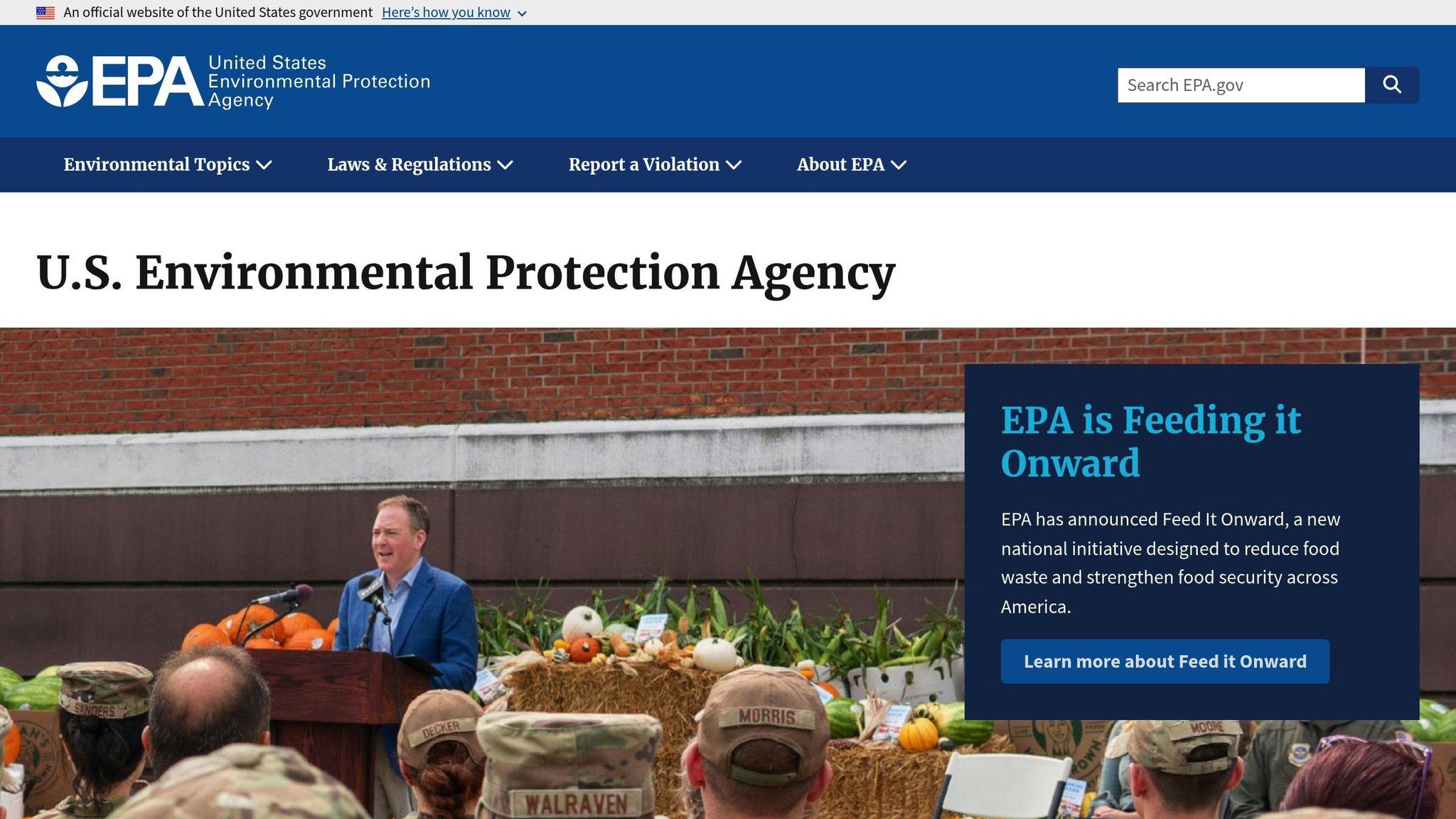
The EPA offers downloadable worksheets to simplify containment capacity calculations. These guides cover rectangular, square, and cylindrical systems, ensuring you account for key factors like tank displacement and rainfall. Using these standardized formats can help during compliance inspections.
For more complex scenarios, online calculation tools can automate the formulas and reduce errors. These tools are especially helpful for irregularly shaped containment systems or when multiple adjustments are needed. However, always cross-check results with EPA worksheets for accuracy and documentation purposes.
If you’re dealing with specialty chemicals, consulting experts like Allan Chemical Corporation can provide additional insights into meeting technical and regulatory standards for chemical storage and handling.
This information is for general guidance only. Always consult relevant regulations and qualified professionals for specific compliance requirements.
sbb-itb-aa4586a
Common Calculation Mistakes and Compliance Issues
Even experienced facility managers can sometimes miscalculate containment capacity, leading to potential compliance violations and environmental risks. Recognizing these common errors and adopting the right safeguards can help avoid costly fines and prevent environmental damage. Below, we break down frequent mistakes and adjustments needed to ensure accurate and compliant calculations.
Frequent Calculation Errors
One of the most common missteps is overlooking freeboard, which accounts for precipitation. Without this allowance, containment systems may overflow during heavy rain, causing environmental releases and regulatory breaches. To avoid this, always include the capacity for a 24-hour, 25-year storm event in your containment calculations[1][3].
Another frequent issue is misidentifying the largest container. Regulations require secondary containment to handle either 100% of the largest single container or 10% of the total volume, whichever is greater[5]. Miscalculating this can lead to non-compliance, so always base your calculations on the largest container at your facility.
Facilities also often fail to account for volume displaced by internal structures, which inflates capacity estimates. For example, if a containment berm is rated for 5,000 gallons but internal supports displace 200 gallons, the actual capacity is reduced to 4,800 gallons. Be sure to subtract the volume taken up by supports, piping, or additional tanks from the total containment volume[3][2].
In areas with sloped terrain, using the maximum wall height without adjustment can lead to overestimated capacities. For sloped or irregular shapes, apply proper formulas like 0.333 × Length × Width × Height × 7.48 for pyramid-shaped slopes[2].
Site-Specific Adjustments
Several site-specific factors can significantly impact containment capacity calculations. Floor slope, wall height, and displacement by support structures are critical considerations. A sloped floor reduces the effective containment height, and support beams or tank legs take up space that must be subtracted from the total capacity. Ignoring these factors often results in overestimations.
Weather conditions also play a major role. For instance, facilities in regions with heavy rainfall may need additional capacity beyond the standard 10% freeboard. Indoor setups may have different precipitation-related requirements than outdoor installations, further affecting calculations.
When multiple containers share a single containment area, the complexity increases. Each tank and piece of equipment reduces the available containment volume. These reductions need to be carefully measured and documented to ensure compliance.
Keeping Calculations Current
To maintain compliance, it’s essential to regularly update your capacity calculations. Storage configurations often change – whether through the addition of larger tanks, rearranged layouts, or altered site conditions. If you don’t update your calculations after such changes, your containment system might no longer meet regulatory standards, exposing your facility to fines or spill risks[5].
Keeping detailed records is equally important. Maintain calculation worksheets, diagrams, and documentation of all updates. These records should include the date of each calculation, the responsible party, and any assumptions made during the process. Using standardized tools, such as EPA worksheets or digital platforms, can make calculations more transparent and easier to audit during inspections[4][3].
Establishing a formal review schedule – annually or whenever significant changes occur – is an effective way to stay ahead of compliance issues. Partnering with experienced suppliers, like Allan Chemical Corporation, can also provide valuable technical support and guidance to ensure your containment systems remain properly sized and compliant.
Lastly, training your team on accurate calculation methods and regulatory requirements can significantly reduce errors. A well-informed staff ensures consistent adherence to standards and minimizes the risk of compliance issues.
This content is for informational purposes only. Consult official regulations and qualified professionals before making sourcing or formulation decisions.
Best Practices for Secondary Containment Compliance
To maintain effective and compliant containment systems, it’s essential to go beyond accurate capacity calculations and record-keeping. Facilities that excel in this area adopt structured strategies focused on regular maintenance, reliable supplier relationships, and safeguards against environmental challenges.
Regular System Reviews and Maintenance
Routine inspections are the backbone of containment compliance. Aim for annual inspections at a minimum, but increase the frequency in high-risk environments. These inspections should thoroughly evaluate containment structures for any signs of cracks, corrosion, or leaks that could jeopardize their effectiveness[2][3].
During these reviews, confirm that your containment capacity calculations align with actual storage volumes. Changes in tank sizes, container counts, or site layouts demand immediate recalculations to stay compliant. Always document inspection findings to streamline audits and ensure accountability.
Quick action is also necessary after severe weather events or significant site changes. For instance, one facility discovered during a quarterly inspection that accumulated rainwater had reduced its available containment capacity below regulatory limits. The solution? They installed a sump pump with an automatic level sensor to remove excess water and updated their inspection protocol to include weekly water removal. This proactive adjustment restored compliance and reduced the risk of overflows during heavy rain[1][3].
Address deficiencies as soon as they’re detected to avoid larger violations. Clear debris, fix structural issues, and keep detailed records of all maintenance activities. These steps not only support compliance but also help maintain a well-organized system that can withstand audits and inspections.
Partnering with Certified Chemical Suppliers
Working with reliable chemical suppliers plays a key role in maintaining containment compliance and operational safety. Suppliers with a strong track record and recognized certifications provide materials that meet high-quality standards, which minimizes contamination risks and supports regulatory adherence.
Take Allan Chemical Corporation as an example. With over 40 years of experience in regulated industries, they offer technical-grade solutions backed by thorough documentation. Certified suppliers like these provide critical materials such as Safety Data Sheets (SDS) and Certificates of Analysis (CoA), which are invaluable for risk assessments, emergency planning, and designing effective containment systems[6].
Beyond product quality, trusted suppliers tailor their offerings to meet specific operational needs, reducing the likelihood of using incompatible materials that could undermine containment integrity. Their deep understanding of compliance requirements also helps facilities stay ahead of potential challenges. Additionally, dependable supply chains ensure a steady flow of compliant materials, preventing disruptions.
When choosing suppliers, prioritize those who offer detailed documentation for every product and adhere to recognized quality standards. Look for partners who can customize solutions to fit your specific processes and containment systems. Combining supplier expertise with sound environmental protection practices strengthens your compliance efforts.
Weather Protection Measures
Precipitation is a common challenge for secondary containment systems, but there are effective ways to manage it. Installing permanent covers or roofs over containment areas provides solid protection against rainwater. If permanent structures aren’t viable, consider retractable canopies or tarps as alternatives.
Drainage systems are another essential tool. They allow for controlled removal of rainwater without compromising containment capacity. Use local rainfall data to set freeboard requirements rather than relying solely on general guidelines like the standard 10%. Facilities in areas with heavy seasonal rainfall might need to plan for additional capacity to handle extreme conditions[1][3].
Regularly removing accumulated water is critical for maintaining the required containment capacity. Automated systems, such as sump pumps with level sensors, offer a reliable solution that doesn’t rely on constant manual intervention. However, ensure that your drainage systems are equipped with controls to prevent accidental discharge of contaminated materials.
For outdoor containment systems, establish clear pre-storm and post-storm procedures. Before a storm, inspect drainage systems, remove any standing water, and check the integrity of covers. After the storm, assess whether containment capacity has been affected and address any damage promptly.
Combining physical protective measures with strong operational procedures creates a comprehensive defense against weather-related compliance issues. Keep detailed records of all weather protection strategies and their maintenance schedules to demonstrate your proactive approach to regulators.
This content is for informational purposes only. Always consult official regulations and qualified professionals before making sourcing or containment decisions.
Conclusion: Ensuring Effective Secondary Containment
Accurate calculations play a key role in meeting regulatory requirements and safeguarding the environment. Mistakes in these measurements can result in inadequate containment, violations of regulations, and even environmental harm[1][2]. The EPA mandates detailed documentation for all calculations, and facilities must be ready to prove compliance during inspections[2][3]. Beyond calculations, consistent system upkeep is essential to ensure long-term performance.
Effective secondary containment requires constant attention. Routine system evaluations, timely maintenance, and quick action during adverse weather conditions are critical to keeping containment systems functioning as intended.
Partnering with seasoned suppliers can further support compliance efforts. Companies like Allan Chemical Corporation, with over four decades of experience in regulated industries, provide not only technical-grade and compendial-grade chemicals but also detailed documentation. Their Safety Data Sheets and Certificates of Analysis assist in conducting thorough risk assessments and making informed decisions about containment system design[6].
By combining precise capacity calculations, high-quality materials, and regular maintenance, facilities can build reliable containment systems that minimize compliance risks and enhance safety. Establishing strong supplier relationships adds another layer of protection, ensuring operational integrity while safeguarding the environment.
This content is for informational purposes only. Consult official regulations and qualified professionals before making sourcing or formulation decisions.
FAQs
How can I check if my facility’s secondary containment system meets EPA compliance standards?
To make sure your facility’s secondary containment system meets EPA standards, you’ll need to calculate the required capacity carefully. Start by considering the volume of the largest container, the likelihood of spills, and any specific EPA guidelines. Generally, the system should be able to hold at least 110% of the largest container’s volume or 10% of the total volume of all containers, depending on which is greater.
Getting these calculations right is essential – not just for compliance but also for protecting the environment. If your facility deals with specialty chemicals, working with a trusted supplier like Allan Chemical Corporation can simplify the process. With decades of experience in regulated industries, they can assist with both compliance and sourcing, ensuring your operations run smoothly.
What are common mistakes to avoid when calculating secondary containment capacity?
When figuring out secondary containment capacity, there are some common mistakes you’ll want to steer clear of to ensure proper compliance and effective containment. First, always include the total volume of the primary containers, factoring in any possible expansion from temperature changes. Ignoring this could leave you unprepared for unexpected spills. Second, remember to account for the space taken up by other items in the containment area, like pumps or equipment – these can significantly reduce available capacity. Lastly, double-check your units of measurement. Mixing metric and imperial units is a quick way to throw off your calculations.
If you’re working in regulated industries, it’s a good idea to seek advice from reliable resources or professionals familiar with compliance and safety requirements. Their expertise can help you avoid costly errors.
How do weather conditions affect secondary containment systems, and what steps can be taken to address these challenges?
Weather can play a big role in how well secondary containment systems perform. Conditions like heavy rain, intense heat, freezing cold, or strong winds can all cause issues. For instance, too much rain might lead to overflow, while freezing temperatures could make some materials crack or become brittle.
To reduce these risks, systems should be built with enough capacity to handle heavy rain and made from materials that can withstand harsh weather. Regular maintenance is also key to spotting and fixing weak points early. Adding covers or drainage systems can help prevent water buildup and shield the system from environmental damage.




Comments are closed