
Synthetic fragrances are lab-made compounds that mimic or enhance natural scents. They are widely used in cosmetics for their stability and affordability. However, their use is tightly regulated due to potential health risks like skin irritation and allergic reactions. Key regulations include:
- U.S. MoCRA (2022): Requires facility registration, allergen disclosure by 2028, and adherence to Good Manufacturing Practices (GMP).
- EU Rules: Enforces labeling of 82 allergens above set limits and mandates detailed documentation.
- IFRA Standards: Categorizes ingredients as prohibited, restricted, or specified, with compliance deadlines for new and existing products.
Manufacturers must ensure proper labeling, maintain safety documentation, and follow GMP to meet these standards. Compliance is critical to avoid fines, recalls, or loss of market access.
Don’t Become EU Non-Compliant – Understanding the 51st Amendment of IFRA Standards Enforcement
Major Regulatory Frameworks for Synthetic Fragrances
Synthetic fragrances in cosmetics are governed by three key regulatory frameworks that address safety, labeling, and compliance. These frameworks set clear standards to ensure products meet regulatory requirements for market entry.
United States: Modernization of Cosmetics Regulation Act (MoCRA)
The Modernization of Cosmetics Regulation Act (MoCRA), enacted in 2022, has significantly expanded the FDA‘s oversight of cosmetics. Under MoCRA, all cosmetic manufacturers, whether domestic or foreign, must register their facilities with the FDA and renew their registrations every two years. This includes manufacturers using synthetic fragrances.
MoCRA also imposes detailed ingredient disclosure requirements. Companies must provide complete lists of fragrance ingredients or categories if adverse reactions are reported. Additionally, by August 1, 2028, manufacturers must disclose all fragrance allergens on product labels. To guide this process, the FDA plans to release draft guidance by June 29, 2024, with finalized documents expected within 180 days after the public comment period.
The act also empowers the FDA to establish Good Manufacturing Practice (GMP) standards for cosmetic production facilities. These standards typically include guidelines on facility design, equipment maintenance, staff training, and thorough documentation practices.
European Union: Allergen Labeling and Compliance Updates
The European Union enforces some of the strictest safety regulations worldwide, particularly for synthetic fragrance allergens. In 2012, the European Commission Scientific Committee on Consumer Safety (SCCS) expanded the list of regulated fragrance allergens from 26 to 82. This updated list includes 28 natural extracts and 54 individual chemicals, with precise identification standards provided through both scientific and common names.
Manufacturers in the EU must label allergens present at concentrations exceeding 0.001% in leave-on products and 0.01% in rinse-off products. To support these claims, they are required to maintain detailed documentation, such as certificates of analysis from fragrance suppliers and internal testing records.
International Fragrance Association (IFRA) Standards
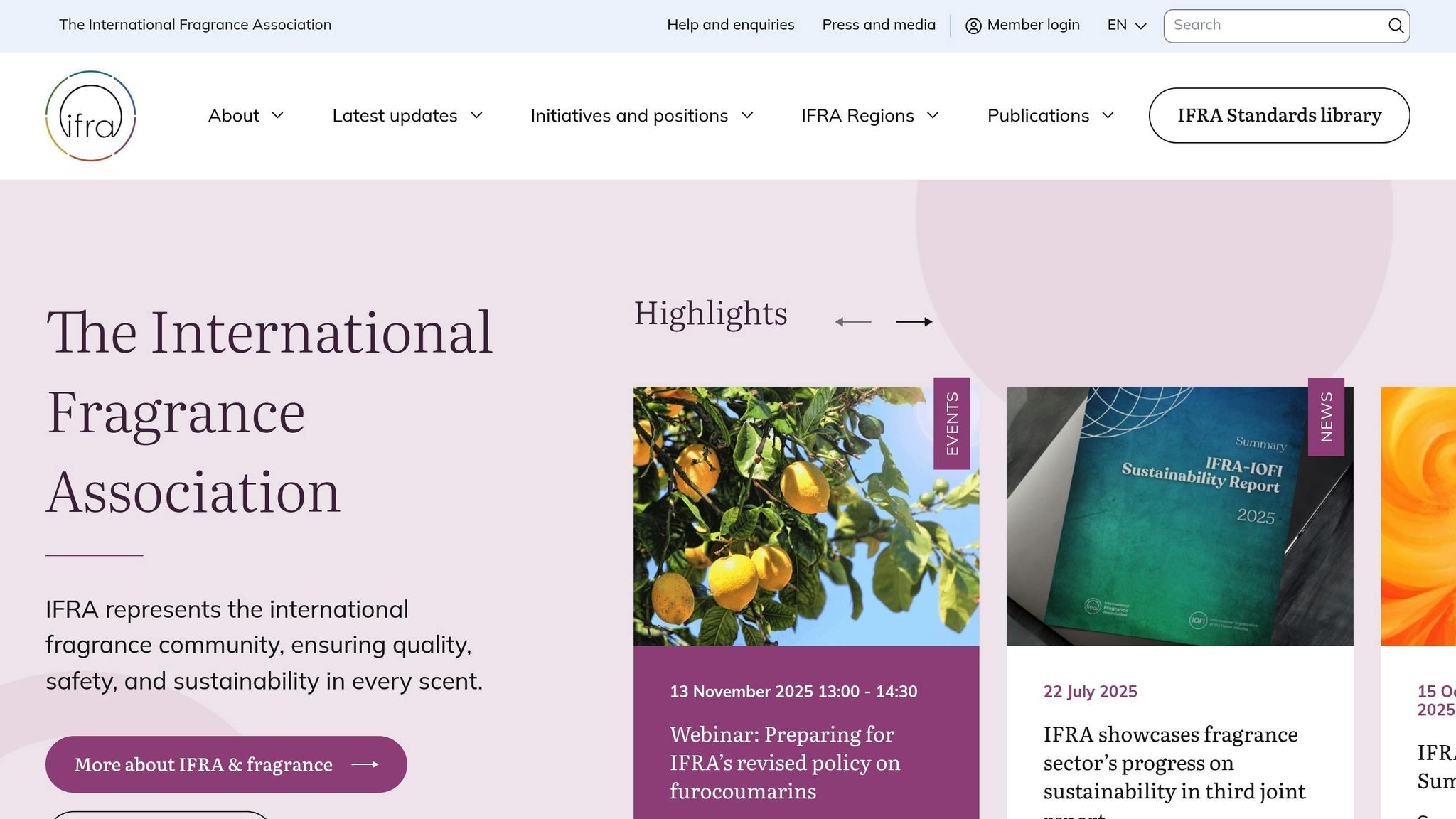
The International Fragrance Association (IFRA) is a globally recognized organization that provides guidance on fragrance safety. While IFRA standards are not legally binding, they are widely adopted throughout the industry and often serve as references in global regulatory frameworks.
IFRA organizes fragrance ingredients into three categories:
- Prohibited: Ingredients that cannot be used in cosmetics under any circumstances.
- Restricted: Ingredients allowed only under specific conditions and concentration limits.
- Specified: Ingredients permitted for use as long as they comply with IFRA specifications.
On June 30, 2023, IFRA introduced its 51st amendment, which updated 12 existing standards, banned one new material, and added 48 restricted materials. For new products, prohibited materials must comply by August 20, 2023, and restricted materials by March 30, 2024. Existing products have until July 30, 2024, for prohibited materials and October 30, 2025, for restricted materials.
| IFRA Category | Description | New Products Deadline | Existing Products Deadline |
|---|---|---|---|
| Prohibited | Ingredients banned from use in cosmetics | August 20, 2023 | July 30, 2024 |
| Restricted | Ingredients allowed under specific conditions | March 30, 2024 | October 30, 2025 |
| Specified | Ingredients compliant with IFRA standards | Ongoing compliance | Ongoing compliance |
These frameworks collectively define the safety and compliance standards that cosmetic manufacturers must follow. They serve as critical guidelines for ensuring products meet regulatory expectations.
This content is for informational purposes only. Always consult official regulations and qualified professionals for sourcing or formulation decisions.
Compliance Requirements for Cosmetic Manufacturers
For cosmetic manufacturers working with synthetic fragrances, adhering to regulatory standards is a must. These requirements span labeling, manufacturing practices, and safety documentation, ensuring products align with federal regulations and safeguard consumer health.
Labeling and Allergen Disclosure
Under the Modernization of Cosmetics Regulation Act (MoCRA), manufacturers are required to list all fragrance allergens on product labels if their concentrations exceed regulatory thresholds. The FDA is currently developing detailed guidance to standardize allergen disclosure. To ensure consistency and transparency, manufacturers must use the International Nomenclature of Cosmetic Ingredients (INCI) when labeling synthetic fragrance components. This approach facilitates clear communication with both consumers and regulatory bodies across global markets.
To comply, manufacturers often rely on technical documentation or analytical testing to identify allergens in their formulations. Once identified, they compare allergen levels against regulatory limits and include any required disclosures on product labels. The European Union (EU) already enforces detailed allergen labeling rules, and manufacturers must stay vigilant as these regulations evolve and allergen lists expand.
Proper labeling is just one piece of the puzzle – ensuring product quality also hinges on robust manufacturing practices.
Good Manufacturing Practice (GMP) for Cosmetics
MoCRA grants the FDA authority to establish comprehensive Good Manufacturing Practice (GMP) standards for facilities producing cosmetics with synthetic fragrances. These standards cover everything from facility design and equipment upkeep to staff training and documentation, all aimed at maintaining consistent product quality and safety.
Key GMP practices include maintaining a clean and controlled manufacturing environment, with strict controls over temperature and humidity. Every stage of production – from receiving raw materials to packaging the final product – must be documented. Staff training programs should emphasize proper handling of synthetic fragrances, contamination prevention, and quality control protocols.
Documentation is a cornerstone of GMP compliance. Manufacturers are required to maintain detailed batch records, equipment maintenance logs, and quality control test results. They must also have procedures in place to investigate any deviations from standard processes. Facility registration is another critical obligation under MoCRA; all cosmetic manufacturers, both domestic and international, must register their production sites with the FDA and renew these registrations every two years.
Safety Documentation and Reporting Requirements
Safety documentation plays a vital role in ensuring compliance alongside labeling and GMP. Manufacturers must maintain thorough records, including safety data sheets, certificates of analysis, and documentation of safety evaluations for every fragrance ingredient used.
Safety assessments should follow established scientific methods, such as in vitro testing, human patch tests, and risk evaluations for skin sensitization. Qualified safety assessors must document these evaluations to confirm that each synthetic fragrance ingredient is safe for its intended use and concentration in the final product.
Another key compliance requirement under MoCRA is adverse event reporting. Manufacturers must establish systems for collecting consumer complaints, investigating product-related incidents, and submitting timely reports to the FDA for serious adverse events. This involves maintaining detailed records of adverse reactions and the steps taken in response.
"Specifications, Certificates of Analysis, and Safety Data Sheets (SDS) are available on request." – Allan Chemical Corporation
Companies like Allan Chemical Corporation provide essential support by offering documentation such as specifications, certificates of analysis, and safety data sheets for synthetic fragrance compounds. Their high-grade chemicals (USP, FCC, ACS, NF) and adherence to rigorous quality processes help manufacturers meet regulatory documentation standards.
It’s important to regularly update safety documentation to reflect new regulations. Manufacturers should also implement systems to monitor updates from the FDA, EU regulatory bodies, and the International Fragrance Association (IFRA) to ensure their safety assessments remain current.
This content is for informational purposes only. Consult official regulations and qualified professionals before making sourcing or formulation decisions.
sbb-itb-aa4586a
Safety Assessment and Risk Management
Safety assessments and risk management play a key role in meeting regulatory requirements and safeguarding consumer health.
Safety Evaluation Methods
Modern safety evaluations rely on a variety of ethical methods to ensure accurate results. Skin sensitization testing is especially important, as allergic reactions are a major safety concern. While traditional tests like the Local Lymph Node Assay (LLNA) are still used, they are increasingly being supplemented – or even replaced – by non-animal alternatives.
Tests such as the Direct Peptide Reactivity Assay (DPRA) and KeratinoSens™ have gained recognition as effective non-animal methods for assessing skin sensitization risks. Additionally, human patch testing remains a reliable tool for validating final products, particularly when working with new synthetic ingredients or intricate fragrance blends.
Toxicological studies go beyond immediate safety concerns, evaluating risks like acute and chronic toxicity, mutagenicity (potential to cause genetic mutations), carcinogenicity (cancer-causing potential), and reproductive health effects. These studies use a mix of lab tests, scientific literature, and computational models to provide a comprehensive understanding of both short-term and long-term health risks.
In silico modeling – using computer simulations to predict toxicity based on molecular structures and existing data – has become a valuable tool. It reduces the need for additional testing while delivering scientifically sound risk assessments. This shift toward alternative methods aligns with broader regulatory trends, such as the Modernization of Cosmetics Regulation Act (MoCRA), which encourages validated non-animal testing approaches.
These advancements are not just about innovation – they also help align testing practices with international safety standards, paving the way for easier global comparisons.
Global Safety Standards Alignment
While advanced evaluation methods are critical, aligning these findings with international safety standards remains a complex task. Organizations like the International Fragrance Association (IFRA) and the Research Institute for Fragrance Materials (RIFM) are working to establish global benchmarks. However, differences in regional regulations – such as testing protocols, allergen requirements, and disclosure rules – continue to pose challenges.
Recent updates from the EU and IFRA demonstrate efforts to bring safety standards closer together. However, manufacturers still face the reality of navigating varying requirements across markets. For example, the United States, under MoCRA, prioritizes safety substantiation and adverse event reporting, while the European Union focuses on detailed safety assessments and allergen transparency. This means manufacturers need adaptable documentation systems to meet the requirements of multiple regulatory frameworks.
Allan Chemical Corporation helps simplify this process by providing synthetic fragrance compounds that meet quality standards such as USP, FCC, ACS, and NF. Their detailed documentation – including specifications, certificates of analysis, and safety data sheets – supports manufacturers in maintaining consistent safety standards across global markets.
This content is for informational purposes only. Always consult official regulations and qualified professionals when making sourcing or formulation decisions.
Allan Chemical Corporation‘s Compliance Support
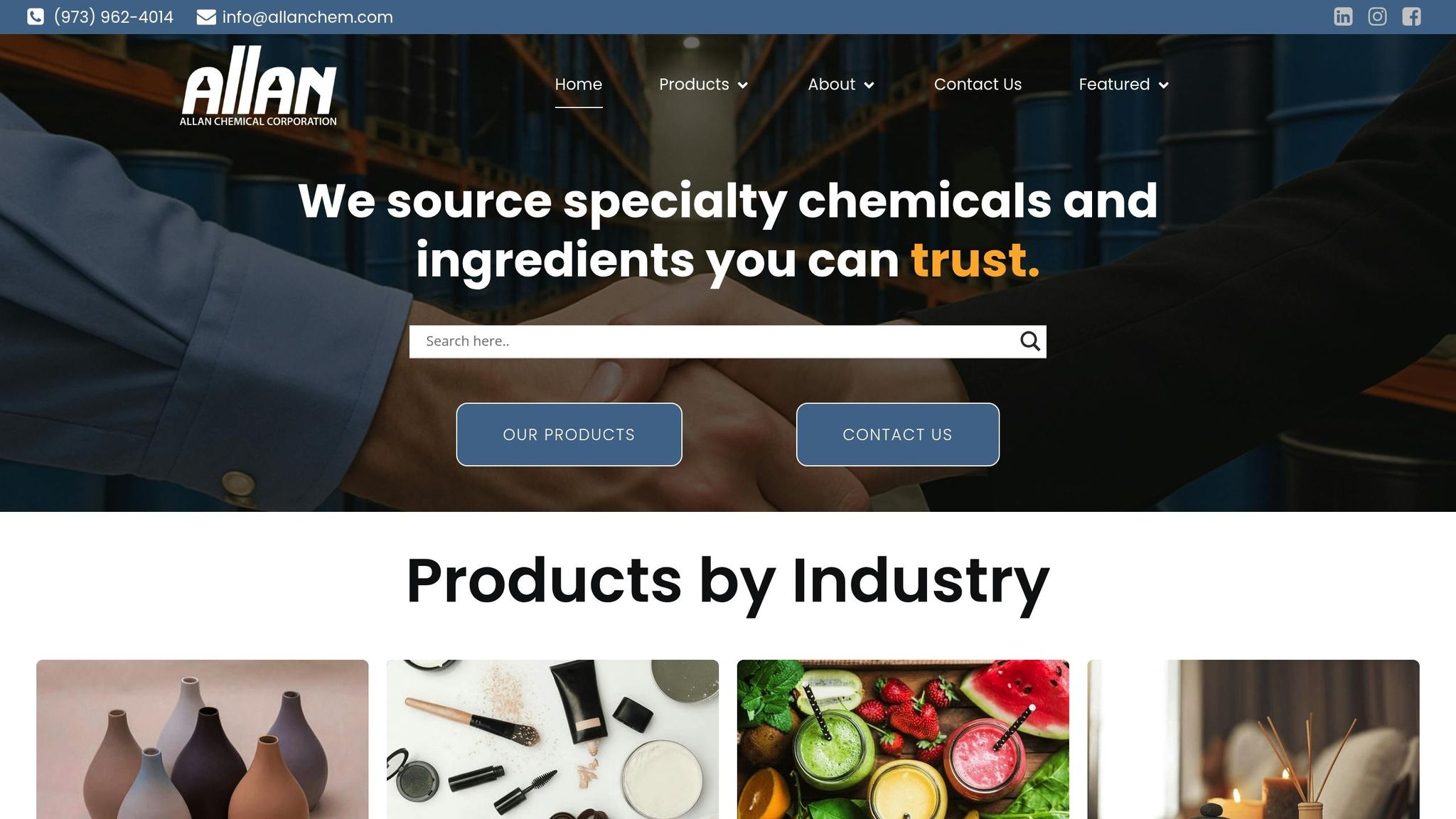
Navigating the complex landscape of synthetic fragrance regulations requires a trusted partner. With over four decades of expertise, Allan Chemical Corporation provides synthetic fragrance compounds that meet stringent regulatory standards.
Sourcing High-Quality Synthetic Fragrance Compounds
Allan Chemical Corporation specializes in sourcing technical- and compendial-grade synthetic fragrance compounds that align with MoCRA (Modernization of Cosmetics Regulation Act) and IFRA (International Fragrance Association) standards. Their rigorous supplier vetting and quality assurance processes ensure compliance with these regulations.
The company offers fragrance compounds that meet pharmacopeial standards such as USP (United States Pharmacopeia), FCC (Food Chemicals Codex), ACS (American Chemical Society), and NF (National Formulary) grades. These compounds are manufactured and tested to meet the precise specifications required for regulated cosmetic applications, ensuring adherence to both U.S. and international guidelines.
"At AllanChem, many of our products conform to, or exceed, the latest compendia of quality standards. These include but are not limited to ACS, USP, NF, FCC, Kosher and Halal."
- Allan Chemical Corporation
In addition to standard products, Allan Chemical Corporation excels at sourcing rare or specialized compounds and offering custom-produced solutions tailored to specific client needs. This capability is invaluable for manufacturers working with unique formulations or adapting to evolving regulatory requirements that demand precise documentation.
Comprehensive Compliance Documentation Support
Regulatory compliance hinges on clear and accurate documentation, and Allan Chemical Corporation provides the essential paperwork manufacturers need to ensure their products meet safety and regulatory standards. Their services include detailed Certificates of Analysis (COAs), Safety Data Sheets (SDS), and other critical documents required for MoCRA registration, IFRA compliance, and allergen disclosure.
Their documentation includes comprehensive ingredient details and allergen data, helping manufacturers comply with labeling requirements under MoCRA and EU regulations. Notably, the European Union expanded its list of regulated fragrance allergens from 26 to 82 in 2023[1]. This change necessitates more thorough labeling and documentation practices, which Allan Chemical Corporation is well-equipped to support.
To emphasize their commitment to compliance, the company has appointed Samber Bachkhaz as their Regulatory Document Coordinator. This role ensures manufacturers receive accurate and up-to-date paperwork, reducing the risk of non-compliance and streamlining regulatory submissions.
Certified Processes for Regulatory Excellence
Allan Chemical Corporation’s operations are guided by recognized quality standards. Their ISO 9001 certification reflects a robust quality management system that ensures consistent sourcing, handling, and distribution of products. Meanwhile, their adherence to ISO 14000 highlights their dedication to environmental responsibility. Together, these certifications help manufacturers meet global regulatory requirements.
The company’s efficient inventory management system supports just-in-time delivery, minimizing inventory costs while maintaining complete batch traceability. This traceability is crucial for regulatory reporting, recall management, and compliance with Good Manufacturing Practice (GMP) standards under MoCRA.
By integrating certified processes and offering expert regulatory guidance, Allan Chemical Corporation not only supplies high-quality fragrance compounds but also simplifies regulatory submissions for manufacturers. Their expertise in harmonizing documentation across U.S., EU, and IFRA standards ensures manufacturers can maintain compliance and secure market access in multiple regions.
This content is for informational purposes only. Always consult official regulations and qualified professionals when making sourcing or formulation decisions.
Conclusion
The rules governing synthetic fragrances in cosmetics have undergone major changes, with the Modernization of Cosmetics Regulation Act (MoCRA) marking the most important update to U.S. cosmetics laws in over 80 years[5][4]. Together with European Union regulations and International Fragrance Association (IFRA) standards, these guidelines create a strong framework to protect consumers and support progress in the cosmetics industry.
Following these regulations isn’t just a legal requirement – it’s a necessity for any business that values its reputation and customer trust. Ignoring compliance can lead to FDA actions, product recalls, fines, loss of market access, and long-term damage to brand reputation[1][3][6]. The financial and reputational fallout from non-compliance can undo years of hard work in building a trusted brand.
For example, the EU’s expanded allergen list shows how quickly rules can shift, making it essential for manufacturers to stay ahead of the curve[1]. Similarly, the latest IFRA updates highlight the ongoing nature of these changes, with new restrictions and bans on materials requiring manufacturers to act swiftly[1][2].
To navigate these changes successfully, manufacturers need a proactive compliance strategy. This goes beyond simply knowing the rules – it involves building strong supplier relationships, maintaining thorough documentation, and conducting regular safety assessments. Key steps include keeping accurate safety records, ensuring proper allergen labeling, and applying Good Manufacturing Practice (GMP) standards across all operations[1][5].
Efforts to align U.S., EU, and international standards are opening doors for businesses that see compliance as more than just a requirement. Companies that invest in reliable suppliers and detailed documentation can adapt quickly to regulatory updates, giving them an edge in multiple markets.
As regulations continue to shift, manufacturers who view compliance as a core business strategy – not a burden – will be better equipped to handle future changes. By embedding these practices into their operations, companies can preserve consumer trust and position themselves for long-term success.
This content is for informational purposes only. Always consult official regulations and qualified professionals before making sourcing or formulation decisions.
FAQs
How do U.S. MoCRA regulations differ from EU standards for synthetic fragrance allergens?
The U.S. Modernization of Cosmetics Regulation Act (MoCRA) and European Union (EU) regulations both aim to protect consumers from synthetic fragrance allergens in cosmetics, but their methods and focus differ significantly. MoCRA emphasizes improving product safety and transparency in the U.S. by requiring manufacturers to register production facilities, disclose product ingredients, and report any adverse events. On the other hand, EU regulations are stricter, requiring explicit labeling of specific fragrance allergens and enforcing a detailed list of restricted or banned substances.
One notable distinction lies in labeling requirements. The EU mandates that 26 specific fragrance allergens must be listed on product labels if their concentration exceeds defined thresholds. In contrast, MoCRA does not impose such a requirement in the U.S. Another key difference is the EU’s reliance on the precautionary principle, which often leads to a more proactive approach in restricting substances that may pose risks.
What role do IFRA standards play in the development and marketing of cosmetic products with synthetic fragrances?
The International Fragrance Association (IFRA) standards serve as crucial guidelines for the safe use of synthetic fragrances in cosmetic products. Rooted in scientific research, these standards specify restrictions or outright bans on certain fragrance ingredients, prioritizing consumer health and safety.
For cosmetic manufacturers, following IFRA standards is more than just a regulatory necessity. It’s a way to assure consumers of a brand’s dedication to safety and quality. Non-compliance can lead to barriers in market entry and erode consumer trust, making adherence a vital aspect of product development and reputation management.
What are the key steps cosmetic manufacturers should take to comply with synthetic fragrance regulations?
To comply with global regulations for synthetic fragrances, cosmetic manufacturers should take the following key steps:
- Understand the regulations: Familiarize yourself with standards like the FDA’s guidelines in the U.S., the EU Cosmetic Regulation (EC) No 1223/2009, and other regional rules that may apply to your products. Knowing the specifics is essential to avoid compliance issues.
- Ensure ingredient safety: Verify that all synthetic fragrance components meet safety requirements, including proper allergen labeling and adherence to usage restrictions. This step is critical for both regulatory compliance and consumer trust.
- Maintain detailed records: Keep comprehensive documentation, such as formulation details, safety assessments, and supplier certifications. These records will be essential during inspections or audits to prove compliance.
- Source from trusted suppliers: Work with reputable suppliers who provide high-quality, regulatory-compliant ingredients. Reliable partners ensure your materials meet the necessary standards, giving you peace of mind.
Staying informed about regulations and collaborating with dependable suppliers helps manufacturers meet compliance standards while prioritizing consumer safety.

Comments are closed