
Surface modifiers are specialized chemicals that improve ceramic surfaces without altering their core properties. They enhance adhesion, durability, and resistance to wear, corrosion, and extreme temperatures. Key applications include:
- Industrial Ceramics: Boost adhesion and durability for components in aerospace, automotive, and electronics.
- Harsh Environments: Protect against wear, corrosion, and chemical damage in oil, gas, and power industries.
- Thermal Barrier Coatings: Insulate high-temperature components like turbine blades and furnace parts.
- Electrical and Biomedical Ceramics: Add conductivity, biocompatibility, or antimicrobial properties for electronics and medical implants.
- Decorative Ceramics: Create vibrant colors, metallic finishes, and unique textures for tiles, tableware, and art.
Each application demands precise selection and application of modifiers like silane agents, fluoropolymers, yttria-stabilized zirconia, and metallic lusters. While offering extended lifespan and improved performance, challenges include cost, application complexity, and compatibility with ceramic substrates.
Allan Chemical Corporation provides high-purity surface modifiers tailored for industrial and aesthetic ceramic needs, ensuring reliable performance and consistent quality.
Disclaimer: This content is for informational purposes only. Consult experts and regulations for specific applications.
Transforming Alumina with EPIC’s Three Roller Modifier – Unlocking Advanced Applications!
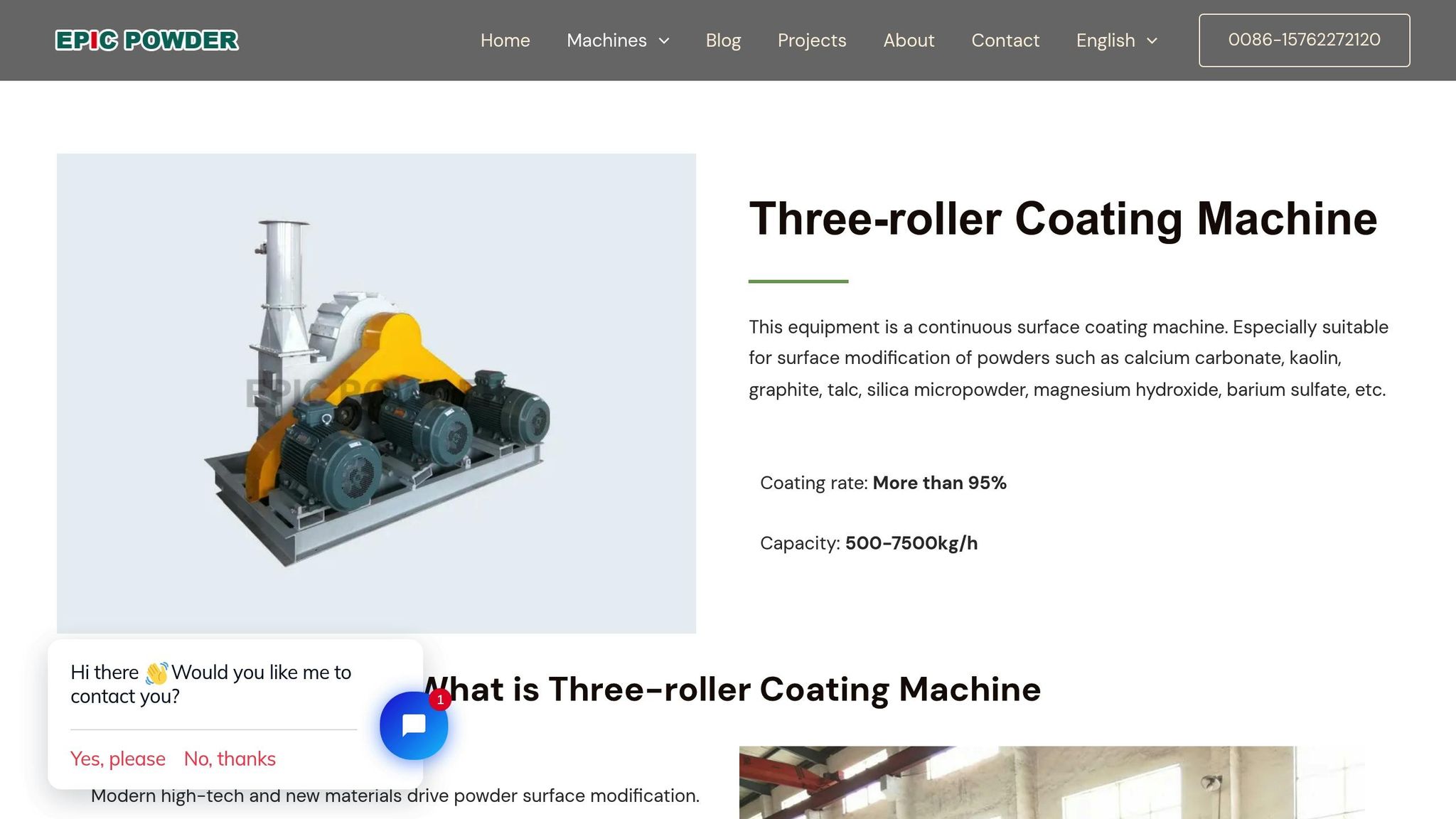
1. Better Adhesion for Industrial Ceramics
When ceramic coatings fail to adhere properly, it can lead to shorter lifespans, frequent breakdowns, and increased maintenance expenses. This is a common challenge in industries relying on inert ceramic substrates.
Surface modifiers address this issue by creating chemical bridges that bond securely to ceramic surfaces. These bridges improve adhesion and enhance resistance to mechanical stress, temperature changes, and chemical exposure.
Types of Modifiers Used
Silane coupling agents are a popular choice for improving ceramic adhesion. They work by interacting with hydroxyl groups on ceramic surfaces. Different formulations, such as aminosilanes, epoxysilanes, and methacrylsilanes, are tailored to suit specific coating chemistries.
For ceramics with higher surface energy, titanate coupling agents offer another solution. They form organometallic bonds, making them ideal for polymer coatings and composites. Meanwhile, zirconate coupling agents are preferred for applications requiring thermal stability under high-temperature conditions.
These modifiers play a vital role across a range of industrial settings.
Key Application Areas
Industries like automotive, aerospace, and electronics rely heavily on surface modifiers to ensure strong adhesion in ceramic components. These solutions help components withstand mechanical stress, extreme temperatures, and harsh chemicals.
Advantages of Surface Modifiers
The use of surface modifiers brings several benefits:
- Extended component lifespan: Stronger adhesion reduces wear and tear, minimizing failures.
- Lower maintenance costs: Enhanced durability means fewer repairs and replacements.
- Improved thermal resistance: Components can handle temperature fluctuations and thermal cycling more effectively.
- Production flexibility: Manufacturers can sometimes use one ceramic substrate with multiple coating types, simplifying production and reducing complexity.
Challenges in Application
Applying surface modifiers effectively requires careful preparation. Proper cleaning or etching of ceramic surfaces is essential to remove contaminants that could interfere with adhesion.
Another challenge lies in the curing process. These modifiers often require precise temperature and humidity controls, which can complicate high-volume manufacturing. Additionally, achieving chemical compatibility between the surface modifier and the coating is critical – mismatched combinations can compromise performance. Manufacturers must conduct thorough testing to ensure success.
Cost is another factor. While premium surface modifiers may increase upfront expenses, they usually pay off through longer component life and reduced maintenance needs.
Allan Chemical Corporation offers technical-grade solutions to meet these challenges.
Disclaimer: This content is for informational purposes only. Consult official regulations and qualified professionals before making sourcing or formulation decisions.
2. Better Wear and Corrosion Resistance in Harsh Environments
Ceramic components used in industrial settings often face tough conditions, including abrasive particles, corrosive chemicals, and extreme temperatures. Without adequate protection, these factors can wear down surfaces, leading to early failure and costly downtime. Surface modifiers provide a solution by creating a protective barrier that extends the lifespan of ceramic components in these demanding environments.
These modifiers form dense, durable coatings on ceramic surfaces. Acting as a shield, the coatings protect against corrosive agents while preserving the structural strength of the ceramic. This is especially valuable in industries where replacing components is both expensive and logistically challenging.
Types of Modifiers Used
Manufacturers rely on various formulations to achieve this level of protection.
- Fluoropolymer modifiers: These enhance corrosion resistance by creating hydrophobic (water-repelling) and oleophobic (oil-repelling) surfaces. The strong chemical bonds formed by fluorine atoms make these coatings durable, even in harsh chemical environments.
- Phosphonate coupling agents: Particularly useful in acidic settings, these modifiers bond with metal ions, forming stable complexes. This helps ceramic components resist chemical breakdown in the presence of mineral acids or oxidizing agents.
- Diamond-like carbon (DLC) precursors: These coatings are applied to improve wear resistance. Their exceptional hardness reduces friction and wear rates while remaining chemically inert, making them ideal for high-stress applications.
Primary Application Areas
The chemical processing industry is one of the main sectors benefiting from these protective modifiers. Ceramic pump components, valve seats, and reactor linings are examples of equipment that gain enhanced resistance to concentrated acids, bases, and organic solvents.
Oil and gas operations also rely on these coatings. In demanding applications like downhole drilling, pipelines, and refinery machinery, ceramic components face abrasive particles, corrosive fluids, and high pressures – making protective layers essential for performance and durability.
Power generation facilities use these modifiers on ceramic parts in coal-fired boilers, gas turbines, and nuclear reactors. These environments demand coatings that can withstand high temperatures and chemically aggressive conditions.
Key Benefits
Using protective surface modifiers offers several advantages, with one of the most important being the extended lifespan of ceramic components. This leads to reduced maintenance costs and improved operational reliability over time.
Another benefit is the preservation of smooth surfaces, which is critical in applications involving fluid flow or mechanical contact. By reducing surface roughness, these coatings minimize turbulence and maintain optimal operating conditions. Additionally, they help prevent contamination by reducing the release of unwanted metal ions or particles into process streams, ensuring product purity.
Despite these benefits, applying these protective coatings does pose some challenges.
Limitations or Challenges
One significant challenge is the complexity of the application process. Achieving consistent coatings often requires precise process controls, which can increase costs and limit the size of components that can be treated.
While ceramics themselves can handle extreme temperatures, some organic-based modifiers may lose their effectiveness at very high heat levels. Additionally, the thickness of the coating is crucial – too thin, and the protection is insufficient; too thick, and it may affect tolerances or induce stresses. Applying these coatings evenly across complex geometries requires careful planning and execution.
Although the initial investment in these modifiers may be higher, their durability helps offset costs by extending the life of components and reducing the need for frequent maintenance.
Allan Chemical Corporation provides technical-grade surface modifiers specifically designed for harsh environments, reflecting their dedication to improving ceramic performance under challenging conditions.
Disclaimer: This content is for informational purposes only. Consult official regulations and qualified professionals before making sourcing or formulation decisions.
3. Thermal Barrier Coatings for High-Temperature Applications
Ceramic components used in jet engines, gas turbines, and industrial furnaces face intense heat that can compromise their integrity over time. Thermal barrier coatings (TBCs) act as a protective shield, reducing heat transfer and preserving the structural strength of these components under extreme conditions.
Materials and Application Techniques
The effectiveness of TBCs hinges on the materials and methods used in their application.
Yttria-stabilized zirconia (YSZ) is the most common material for TBCs, thanks to its excellent ability to insulate against heat and remain stable at elevated temperatures. Typically, YSZ is stabilized with 6–8% yttria, ensuring its crystal structure remains intact during repeated heating and cooling cycles.
Suspension plasma spraying (SPS) is a key technique for applying TBCs. This method creates a network of microcracks that allows the coating to handle thermal stress while maintaining the porosity needed for thermal insulation [3].
MCrAlY bond coats serve as a vital intermediate layer between the ceramic substrate and the TBC topcoat. Made from alloys containing nickel, cobalt, chromium, aluminum, and yttrium, these coatings enhance adhesion, resist oxidation, and help balance the thermal expansion differences between the ceramic layer and the metal substrate.
Where TBCs Are Used
TBCs play an essential role in industries where components must endure extreme heat. In aerospace, they are applied to turbine blades, combustor liners, and vanes in jet engines, enabling these parts to withstand high operating temperatures. In power generation, TBCs improve the performance of ceramic components in coal-fired boilers and combined-cycle gas turbines, reducing the need for cooling systems. Industrial furnaces also rely on these coatings to extend the lifespan of ceramic heating elements, kiln furniture, and refractory parts exposed to frequent thermal cycling. These examples highlight the importance of TBCs in maintaining performance and durability in high-temperature settings.
Advantages of TBCs
One of the standout benefits of TBCs is their ability to significantly lower the temperature of underlying components compared to uncoated surfaces. This temperature reduction minimizes thermal stress, which helps extend the lifespan of ceramic parts. Additionally, TBCs enable higher operating temperatures, leading to better thermodynamic efficiency and fuel savings. By enhancing surface properties, these coatings allow ceramic components to perform reliably in demanding conditions without compromising their inherent characteristics.
Challenges and Limitations
While TBCs offer many benefits, they are not without challenges, particularly in high-temperature environments.
Adhesion and interface stability are persistent issues due to differences in thermal expansion rates between the ceramic topcoat and metallic substrates [1]. For instance, YSZ has a thermal expansion coefficient of 10–11 × 10⁻⁶ K⁻¹, whereas common substrates measure around 15 × 10⁻⁶ K⁻¹. This mismatch can lead to cracking or delamination during thermal cycling [2]. Techniques like sandblasting and precision machining can improve adhesion, but maintaining consistency requires strict process control, adding complexity to production.
Another challenge is coating complex geometries, such as the intricate internal channels found in modern 3D-printed components. Uneven coating in these areas can create thermal hotspots, reducing performance. Solutions like adaptive masking and robotic spraying systems with digital path control improve uniformity but increase equipment costs and production complexity [1].
Environmental degradation also poses a threat to TBCs. Over time, exposure to erosion, calcium-magnesium-alumino-silicate (CMAS) attack, and molten salts can weaken the coating’s effectiveness [1][4]. Periodic inspections and recoating are necessary to maintain performance. Protective topcoat modifications and multilayer systems can slow degradation, and in some cases, altering the TBC composition to promote CMAS crystallization can help prevent further damage [1][3].
Allan Chemical Corporation offers technical-grade precursors for thermal barrier coatings, supporting industries that require reliable solutions for high-temperature ceramic applications.
Disclaimer: This content is for informational purposes only. Consult official regulations and qualified professionals before making sourcing or formulation decisions.
sbb-itb-aa4586a
4. Functional Modifiers for Electrical and Biomedical Ceramics
Functional modifiers play a critical role in enhancing ceramic surfaces for electrical and biomedical uses. By introducing specific properties – like controlled conductivity, biocompatibility, or antimicrobial activity – these modifiers allow ceramics to meet the demands of specialized applications. This is particularly important when precise electrical performance or compatibility with biological systems is required.
Types of Modifiers
Conductive modifiers are crucial for electrical ceramics. Silver nanoparticles are commonly used to create conductive pathways while preserving the ceramic’s structural integrity. For cost-sensitive applications, copper and nickel-based alternatives provide a balance between performance and affordability, even if they don’t achieve maximum conductivity.
Bioactive modifiers are indispensable in medical ceramics. Coatings like hydroxyapatite encourage bone integration, while calcium phosphate compounds improve compatibility with human tissue. These enhancements help implants bond naturally with the body, reducing rejection risks and improving recovery outcomes.
Antimicrobial modifiers are designed to inhibit bacterial growth on ceramic surfaces, a key requirement for medical devices and implants. Silver ions and copper compounds are effective options, while zinc oxide nanoparticles offer antimicrobial protection without compromising biocompatibility.
Application Areas
Functional modifiers unlock a range of applications across industries:
- Electronics: Modified ceramics serve as substrates for circuit boards, capacitors, and sensors. For instance, alumina ceramics with conductive treatments ensure precise electrical pathways in high-frequency systems. These materials are also capable of withstanding temperatures up to 1,600°F while maintaining stable electrical properties.
- Medical implants: Bioactive surface treatments are widely used in hip and knee replacements to promote bone growth around the implant. Dental implants, on the other hand, benefit from titanium oxide coatings that encourage osseointegration, where bone tissue directly bonds with the implant.
- Diagnostic equipment: Components like X-ray tubes and parts for MRI machines rely on modified ceramics that can endure repeated sterilization cycles without losing their functionality. Surface treatments ensure durability and consistent performance over time.
Benefits of Functional Modifiers
Functional modifiers bring several advantages to ceramic components:
- Enhanced durability: Modified ceramics excel in extreme environments, from high-temperature electronics to corrosive biological settings, significantly extending their operational lifespan.
- Customizability: Surface properties can be tailored to meet specific application needs, allowing manufacturers to streamline production and reduce inventory by using a single base material with varied treatments.
Challenges and Limitations
Despite their benefits, functional modifiers come with a set of challenges:
- Complex manufacturing requirements: The need for precise temperature control, specific atmospheric conditions, and meticulous timing increases production costs and demands advanced equipment.
- Thermal cycling issues: In electronic applications, repeated exposure to thermal stress can compromise the stability of the modified interface over time.
- Biocompatibility testing: For medical applications, every new modifier must undergo rigorous testing to ensure safety and effectiveness, which can significantly extend development timelines. Regulatory approval processes further add to these delays.
- Cost concerns: Advanced modification techniques and specialized materials often lead to higher production costs, posing challenges for adoption in cost-sensitive markets.
Allan Chemical Corporation supports these industries by supplying technical-grade precursors and specialty chemicals for ceramic surface modification. Their products come with reliable sourcing and detailed technical documentation to meet the needs of electronics and biomedical manufacturers.
Disclaimer: This content is for informational purposes only. Consult official regulations and qualified professionals before making sourcing or formulation decisions.
5. Decorative Surface Modifiers for Appearance and Design Applications
Beyond enhancing performance, decorative modifiers play a key role in transforming the aesthetics of ceramics. These treatments bring distinctive visual effects to ceramic surfaces while complementing their functional qualities. From vibrant colors to unique textures, decorative surface modifiers cater to specific design needs in architecture, art, and consumer products.
Types of Modifiers
Glazes and Ceramic Stains
Glazes and ceramic stains are popular for creating colorful surfaces with finishes ranging from glossy to matte. Metal oxides color ceramic glazes to achieve specific hues: cobalt oxide produces rich blues, chromium oxide results in vivid greens, and iron oxide creates earthy tones that can shift from yellow to deep red depending on the firing atmosphere.
Metallic Lusters
Metallic lusters, incorporating precious metals like gold or platinum, add a luxurious shimmer to ceramics. These lusters consist of fine metal particles suspended in an organic medium, which burns away during firing, leaving a thin metallic layer. Silver-based lusters offer similar brilliance, while copper-based versions can produce a striking iridescent effect.
Textural Modifiers
Textural modifiers change the surface feel without altering the ceramic’s core structure. Additives such as natural sand can create a rough finish, ideal for outdoor architectural features. Other techniques may generate decorative crystalline patterns during cooling, resulting in one-of-a-kind visual effects that vary with each firing.
Primary Applications
Architectural Ceramics
Decorative treatments in architectural ceramics enhance both form and function. Subway tiles, for example, often feature glazes that preserve their classic appearance while improving stain resistance and making cleaning easier. Large ceramic panels used on building exteriors may replicate the look of natural materials like stone or wood, offering durability and weather resistance.
Tableware and Kitchenware
Decorative modifiers in tableware combine practicality with style. Specialized glazes protect the surface from scratches and maintain vibrant colors through repeated use and washing. Reactive glazing techniques are also used to produce unique patterns on items like mugs and serving dishes, adding a personal touch to everyday items.
Art and Craft Ceramics
In artistic ceramics, decorative modifiers unlock creative possibilities. Studio potters often layer multiple glazes to achieve complex, multi-dimensional effects, while ceramic artists use underglazes and overglazes to create intricate, painterly designs. Techniques like Raku firing, which involves rapid cooling and reduction atmospheres, produce dramatic metallic and crackle effects that are nearly impossible to replicate through standard methods.
Benefits of Decorative Modifiers
Enhanced Aesthetics
Decorative modifiers allow for the creation of ceramics that are both functional and visually stunning. The durability of these finishes ensures that colors and textures remain vibrant over time, making them suitable for both indoor and outdoor use.
Brand Differentiation
Custom glaze formulations help manufacturers develop signature styles, setting their products apart in the market. This uniqueness not only strengthens brand identity but also supports premium pricing, as consumers often value visually distinctive ceramics.
Dual Purpose
Some glazes provide added benefits like improved chemical resistance and easier cleaning, combining beauty with practicality.
Challenges to Consider
Temperature Sensitivity
Many decorative modifiers, such as metallic lusters, require precise firing conditions. Even small temperature fluctuations can affect adhesion and the final appearance.
Chemical Compatibility
Thermal expansion differences between the ceramic body and the decorative coating can lead to issues like crazing – fine surface cracks that compromise the finish. This risk is higher when combining multiple modifiers or using low-fire glazes on high-fire ceramics.
Production Complexity
Applying decorative treatments often involves multiple firing cycles and specialized techniques like hand-painting or screen printing. These processes can increase production costs, making advanced decorative modifiers more feasible for high-value products where the added expense is justified.
Allan Chemical Corporation offers a wide range of ceramic colorants and glaze-forming compounds designed for decorative applications. Their products include metal oxide pigments and specialty chemicals tailored to meet the needs of ceramic manufacturers.
Disclaimer: This content is for informational purposes only. Consult official regulations and qualified professionals before making sourcing or formulation decisions.
Comparison Table
Surface modifiers play a critical role in ceramic manufacturing, with their selection depending on application, performance requirements, and cost considerations. To assist in choosing the right modifier, the table below highlights essential data, summarizing their uses, benefits, challenges, and temperature ranges.
| Modifier Type | Primary Applications | Key Advantages | Main Limitations | Temperature Range |
|---|---|---|---|---|
| Silane Coupling Agents | Industrial ceramics, fiber-reinforced composites | Improves adhesion, enhances chemical compatibility | Sensitive to moisture during storage, requires precise application | Up to 572°F (300°C) |
| Ceramic Coatings | Wear-resistant components, cutting tools | Offers excellent hardness, resists chemical damage | High processing costs, brittle under impact | Up to 2,732°F (1,500°C) |
| Thermal Barrier Coatings | Gas turbine components, engine parts | Provides thermal insulation, resists oxidation | Complex application, sensitive to thermal shock | Up to 2,192°F (1,200°C) operating |
| Conductive Modifiers | Electronic substrates, biomedical implants | Enables controlled electrical properties, biocompatible options | Limited temperature stability, requires specialized handling | Varies by composition |
| Glazes and Stains | Decorative ceramics, tableware | Vibrant colors, easy cleaning, design versatility | Firing is temperature-sensitive, may cause crazing | 1,832°F to 2,372°F (1,000°C to 1,300°C) |
| Metallic Lusters | Art ceramics, luxury items | Premium finish, resists corrosion | Expensive materials, needs precise firing conditions | 1,292°F to 1,472°F (700°C to 800°C) |
Key Considerations for Selecting Surface Modifiers
Industrial applications often prioritize durability and performance. For instance, ceramic coatings and silane coupling agents, while more expensive upfront, deliver long-term reliability and enhanced functionality. On the other hand, decorative applications lean toward visual appeal, where glazes, stains, and metallic lusters shine, even if some performance trade-offs are necessary.
Cost and processing complexity are equally vital factors. Silane coupling agents are among the more affordable options for adhesion improvement, while thermal barrier coatings demand significant investment but excel in high-temperature environments. Metallic lusters, due to their inclusion of precious metals, are typically reserved for high-value decorative items. Simpler modifiers, like glazes, can be applied using standard equipment, whereas advanced options like thermal barrier coatings may require specialized tools like plasma spray systems, adding to production complexity and cost.
Allan Chemical Corporation supports ceramic manufacturers with a wide range of specialty chemicals, including coupling agents, metal oxide pigments, and other compounds tailored to meet both performance and aesthetic needs. Their expertise and inventory can help streamline your decision-making process for ceramic applications.
Disclaimer: This content is for informational purposes only. Consult official regulations and qualified professionals before making sourcing or formulation decisions.
Conclusion
Surface modifiers have transformed the ceramic manufacturing landscape, expanding their use from heavy-duty industrial components to eye-catching decorative pieces. These modifiers enable remarkable advancements, from biomedical implants with conductive properties to ceramics with vivid glazes and premium metallic finishes. This dual impact – enhancing both functionality and visual appeal – has made them indispensable in a wide range of ceramic applications.
However, with these advancements comes the critical need for consistent quality and compliance. Industries like aerospace, medical devices, and electronics demand materials that meet strict purity standards and regulatory requirements. Using low-quality modifiers can lead to costly failures or even regulatory violations, emphasizing the importance of sourcing from a reliable supplier.
Allan Chemical Corporation brings over 40 years of expertise in providing specialty chemicals tailored to ceramic manufacturing. Their high-purity solutions cater to both industrial and decorative needs, offering flexible batch sizes and just-in-time delivery to keep operations running smoothly. Whether you’re crafting durable cutting tools or designing high-end tableware, choosing the right surface modifier and supplier can mean the difference between simply meeting requirements and achieving outstanding results. A trusted partner in this field is essential for reaching these advanced goals.
Disclaimer: This content is for informational purposes only. Always consult official regulations and qualified professionals when making sourcing or formulation decisions.
FAQs
What are the main challenges of using surface modifiers in ceramics, and how can they be resolved?
Ceramics, while incredibly useful in various applications, pose some challenges when it comes to applying surface modifiers. Issues like poor adhesion, complex processing requirements, high costs, and the inherent brittleness of ceramics can make modifications tricky. The brittleness, in particular, increases the risk of cracking during these processes, largely due to the unique nature of ceramic materials.
To overcome these hurdles, specialized techniques such as plasma or laser treatments and chemical processes can be employed to improve bonding and surface characteristics. Preparing the surface properly is also key; methods like grit blasting or acid etching can significantly enhance adhesion and durability. By fine-tuning processing parameters and adopting these preparation techniques, it becomes possible to achieve reliable and effective surface modifications, whether for industrial purposes or decorative finishes.
How do surface modifiers enhance the durability and performance of ceramics in high-temperature applications?
Surface treatments play a key role in boosting the durability and performance of ceramics, especially in high-temperature environments. By forming protective oxide layers, these treatments shield ceramics from oxidation and thermal damage, helping them maintain their structure and functionality over time.
Techniques like plasma modification or applying specialized coatings also help minimize wear and friction. This ensures that ceramics can operate dependably even under extreme conditions. These advancements are particularly crucial for industries like aerospace and heavy manufacturing, where reliability and longevity are non-negotiable.
What factors should you consider when choosing surface modifiers for decorative ceramics?
When choosing surface treatments for decorative ceramics, it’s essential to balance aesthetics, material compatibility, and the durability of the finish. Techniques such as slip application, underglazing, carving, or glazing can be used to create distinct textures and visual styles tailored to your design goals.
Equally important is understanding the chemical makeup of the surface treatment. This ensures it can endure environmental factors while integrating smoothly with other decorative features. A thoughtful selection not only enhances the ceramic’s appearance but also ensures a resilient and functional finish.




Comments are closed