
IR Spectroscopy is a precise method used to verify the chemical composition of raw materials. By analyzing how molecular bonds absorb infrared light, it provides a unique "fingerprint" for each compound. This technique is widely used in industries like pharmaceuticals, food production, and electronics to ensure materials meet strict safety and regulatory standards. Tools like a chemical compliance checker can further streamline this verification process.
Key takeaways:
- Fast and reliable testing: IR spectroscopy identifies and confirms materials in minutes.
- Detects impurities: It can spot contaminants, adulterants, and even subtle differences in molecular structures.
- Regulatory compliance: Essential for meeting standards set by organizations like USP and FCC.
- Non-destructive analysis: Minimal sample preparation and no material waste.
While IR spectroscopy excels in speed and accuracy, it has limitations with complex mixtures, opaque samples, and trace impurity detection. Proper calibration, validated reference libraries, and collaboration with suppliers enhance its effectiveness in quality control processes.
How to Use IR Spectroscopy for Raw Material Verification
Sample Preparation and Analysis
One of the great advantages of IR spectroscopy is its minimal sample preparation, making it a go-to method for routine quality control. Thanks to ATR (Attenuated Total Reflectance) technology in most modern instruments, testing is quick and straightforward. Simply place a small amount of the sample onto the ATR crystal, and the analysis can begin almost immediately.
For solids like powders or crystals, you only need a few milligrams – just enough to cover the crystal’s surface. Liquids are even easier to handle; a drop applied with a pipette or dropper is sufficient. Before starting, ensure the sample has reached room temperature (68–77°F) to prevent thermal interference. Once ready, the instrument scans and analyzes the sample’s unique spectral fingerprint to verify its identity.
Spectral Acquisition and Comparison
After preparing the sample, the IR spectrometer captures its molecular fingerprint by scanning the mid-infrared range (4,000–400 cm⁻¹). This process records absorption peaks that correspond to specific molecular vibrations, creating a unique pattern for each chemical compound.
The next step involves comparing the acquired spectrum to reference libraries containing thousands of known compounds. Advanced software uses algorithms to match the test spectrum with these references, requiring at least a 90% match for confirmation. If the match falls within acceptable limits, the system verifies the material’s identity and purity.
Many quality control labs maintain custom reference libraries built using authenticated raw materials they frequently test. These libraries, created under consistent conditions with the same instruments, offer more reliable matching. While building such libraries does require an initial investment in certified reference materials, the improved accuracy is well worth it, especially for critical applications.
Finding Contaminants and Adulterants
IR spectroscopy is also highly effective for spotting impurities and adulterants. Using spectral subtraction techniques, analysts can compare the test spectrum to a pure reference spectrum. Any extra or shifted peaks indicate the presence of contamination or substitution.
For example, water contamination is easy to spot due to its broad peaks around 3,200–3,600 cm⁻¹ and 1,640 cm⁻¹. Organic solvents, on the other hand, produce distinct peaks in their fingerprint regions. Ethanol, for instance, shows sharp peaks at 2,970 cm⁻¹ and 1,050 cm⁻¹, even at low concentrations.
IR spectroscopy can also detect when suppliers substitute materials with similar but incorrect ones. Even subtle differences, like polymorphic forms of the same compound, can be identified in the fingerprint region below 1,500 cm⁻¹. This is especially important in pharmaceuticals, where different crystal forms can significantly impact a drug’s bioavailability and stability.
By identifying contaminants, IR spectroscopy not only ensures material purity but also helps prevent costly production errors.
Disclaimer: This content is for informational purposes only. Always consult official regulations and qualified professionals before making sourcing or formulation decisions.
Benefits and Drawbacks of IR Spectroscopy in Quality Control
Main Benefits of IR Spectroscopy
IR spectroscopy offers quick and efficient analysis, making it a valuable tool for quality control laboratories. With most tests completed in just 2–3 minutes after placing the sample, it supports fast-paced workflows and helps businesses meet tight delivery schedules without sacrificing quality checks.
One standout feature is its non-destructive testing capability. Unlike traditional wet chemistry methods that consume the sample, IR spectroscopy uses only milligrams of material and leaves it intact. This is especially important when working with costly specialty chemicals or limited sample quantities.
Modern advancements, such as ATR-FTIR instruments, have simplified the process further by eliminating labor-intensive preparation steps like grinding or film-making. Technicians can now place the sample directly onto the crystal for immediate analysis, reducing both effort and the likelihood of errors.
Another advantage is its versatility. IR spectroscopy can handle a wide range of material types – powders, liquids, pastes, and even some gases – using the right accessories. This adaptability makes it a cost-effective choice for companies managing diverse raw materials and sourcing custom chemical blends.
The technique also provides quantitative capabilities, allowing users to measure moisture levels, determine purity, and identify specific impurities. For example, it can detect water content as low as 0.1% in many materials. This dual ability to perform both qualitative and quantitative analysis reduces the need for multiple testing methods, streamlining the entire quality control process.
Key Drawbacks of IR Spectroscopy
While IR spectroscopy has many strengths, it does face some challenges. One major limitation is its difficulty in analyzing complex mixtures. Overlapping peaks from multiple compounds can obscure individual components, making it hard to interpret results for formulated products or raw materials with several active ingredients.
Sample opacity is another issue. Dark-colored materials or those containing metals, such as carbon black or iron oxides, can produce spectra that are saturated and uninformative. These cases often require dilution or alternative sampling methods, complicating the process.
The reliance on reference libraries can also pose problems. Commercial databases, while extensive, may not include specific grades, polymorphic forms, or newer chemical variants. Building a custom in-house library takes time and requires certified reference materials, adding to the workload.
Water interference is a common challenge when analyzing hygroscopic samples or materials exposed to humidity. Water’s broad absorption bands in the 3,200–3,600 cm⁻¹ range can mask important peaks, complicating the identification of certain functional groups. Specialized handling or preparation is often needed to address this issue.
Lastly, IR spectroscopy has limited sensitivity for detecting trace impurities. While it works well for impurities at concentrations above 1–5%, it struggles with parts-per-million detection levels. For such cases, more sensitive analytical tools for impurity analysis may be required as a complementary approach.
Comparison Table: Pros and Cons
Here’s a quick overview of the main advantages and limitations:
| Advantages | Limitations |
|---|---|
| Fast analysis (2–3 minutes per sample) | Struggles with complex mixtures |
| Non-destructive testing preserves samples | Issues with dark or opaque materials |
| Minimal preparation required | Incomplete reference libraries for some compounds |
| Works with various material types | Water interference in humid conditions |
| Quantitative capabilities for moisture and purity | Limited sensitivity for trace impurities (<1%) |
| Cost-efficient for routine checks | Requires expertise for spectrum interpretation |
| Real-time results for quick decisions | Temperature sensitivity can affect accuracy |
Despite these challenges, IR spectroscopy remains an essential tool for raw material verification. Understanding its strengths and limitations helps quality control teams decide when and how to use it effectively.
Disclaimer: This content is for informational purposes only. Always consult official regulations and qualified professionals before making sourcing or formulation decisions.
IR Spectroscopy Applications in Regulated Industries
Pharmaceuticals and Healthcare
Pharmaceutical manufacturers depend on IR spectroscopy to confirm the identity and purity of active pharmaceutical ingredients (APIs) and excipients before production begins. This process ensures compliance with USP (United States Pharmacopeia) standards, which mandate stringent testing of raw materials to avoid contamination and guarantee therapeutic effectiveness.
When verifying APIs, IR spectroscopy can differentiate between polymorphic forms – variations in a compound’s crystal structure. This is crucial because different forms can impact a drug’s bioavailability. For instance, in testing acetaminophen, IR spectroscopy can identify the less soluble Form II polymorph, ensuring that only the preferred Form I is used to avoid formulation issues.
The technique is equally effective in authenticating excipients like microcrystalline cellulose by detecting its C-O stretching vibration near 1,060 cm⁻¹. It also identifies counterfeit or substandard materials by comparing spectral fingerprints to reference standards. This is especially important for high-cost APIs, which are more susceptible to economic adulteration.
Beyond pharmaceuticals, IR spectroscopy is essential for maintaining quality in food, cosmetics, and consumer goods.
Food, Cosmetics, and Consumer Goods
In the food industry, IR spectroscopy ensures ingredient authenticity and detects adulteration, supporting FDA Food Code compliance and consumer safety. The method is particularly useful for analyzing protein, fat, and carbohydrate content in bulk ingredients, aiding in the accuracy of nutritional labeling.
For example, IR spectroscopy can authenticate edible oils by identifying characteristic fatty acid absorption bands, such as olive oil’s peak near 3,009 cm⁻¹. This helps prevent costly recalls due to adulterated ingredients.
In cosmetics, raw material integrity is as vital as it is in pharmaceuticals. IR spectroscopy verifies the quality of components like emulsifiers, preservatives, and active ingredients. Cetyl alcohol, a commonly used emulsifying wax, is authenticated through its distinctive C-H stretching bands between 2,850-2,950 cm⁻¹. Additionally, the technique can measure water content in cosmetic bases, a critical factor for preventing microbial growth and ensuring product stability.
The method also plays a role in allergen detection, ensuring compliance with FDA labeling standards. For instance, IR spectroscopy can identify protein signatures from allergens such as milk, soy, or wheat in raw material batches, helping manufacturers maintain accurate allergen labeling and protect sensitive consumers.
Similar rigorous quality controls apply to ceramics, electronics, and specialty chemicals.
Ceramics, Electronics, and Specialty Chemicals
Advanced manufacturing sectors rely on IR spectroscopy to ensure raw materials meet the stringent specifications required for high-performance applications. In ceramics, the method analyzes clay minerals, flux materials, and additives to verify chemical composition and predict firing behavior.
For electronics, silicon dioxide used in semiconductor applications demands purity levels exceeding 99.9%. IR spectroscopy detects trace impurities like hydroxyl groups (OH⁻) around 3,400 cm⁻¹, which can impact the electrical properties of semiconductor devices. Even minimal impurities can lead to device failures or reduced performance in sensitive components.
In specialty chemicals, IR spectroscopy verifies the molecular structure of complex organic compounds used as intermediates or additives. For instance, surfactants in electronic cleaning solutions are analyzed for hydrophobic chain length and functional group composition to ensure they meet the cleanliness standards required in microelectronics manufacturing.
High-performance polymers for aerospace and automotive applications also benefit from IR spectroscopy. The technique ensures these materials meet precise specifications for molecular weight and functional group distribution, reducing the need for time-intensive chromatographic analysis.
Allan Chemical Corporation supports these industries by supplying technical-grade chemicals with certificates of analysis that include IR spectral data. This documentation simplifies the verification of incoming materials while ensuring compliance with regulatory standards.
Disclaimer: This content is for informational purposes only. Always consult official regulations and qualified professionals before making sourcing or formulation decisions.
sbb-itb-aa4586a
Best Practices for Using IR Spectroscopy in Raw Material QC
Validating Reference Spectra
Building a reliable reference library starts with using verified, authenticated samples. These samples should be analyzed under conditions that match your routine testing – this includes consistent sample preparation, instrument settings, and environmental factors. Documenting key parameters ensures traceability and compliance with regulatory standards. Regularly check your reference spectra to catch any signs of instrument drift or material degradation over time. Once your library is in place, focus on maintaining and calibrating your instruments regularly to uphold accuracy.
Regular Calibration and Maintenance
Keeping your IR spectrometer in top shape is essential for dependable results. Routine performance checks with standard materials help verify that your instrument remains accurate in both wavelength and photometric precision. A consistent cleaning routine for optical components, like the ATR crystal surface, prevents contamination and keeps performance intact. Use approved solvents followed by deionized water for cleaning. Stable environmental conditions are equally important, as fluctuations can skew results. Stick to the manufacturer’s maintenance schedule, which typically includes optical alignments, system calibrations, and requalification steps after major repairs. These efforts ensure your system remains reliable and compliant with regulatory standards, setting the stage for effective collaboration with suppliers.
Working with Suppliers for Support
Once your instruments are calibrated and reliable, tap into your supplier’s expertise to simplify raw material supplier verification. Certificates of Analysis (COAs) that include IR data can confirm material identity before in-house testing begins. For instance, Allan Chemical Corporation provides COAs with detailed IR spectral fingerprints that align with validated internal reference standards. This helps streamline incoming inspections and maintain traceability across the supply chain. Suppliers with strong technical support can assist in resolving deviations and refining your testing protocols. Transparent communication, clear documentation, and synchronized delivery schedules are especially critical for materials with limited shelf life, ensuring they are verified and ready for production without delays.
Disclaimer: This content is for informational purposes only. Always consult official regulations and qualified professionals before making sourcing or formulation decisions.
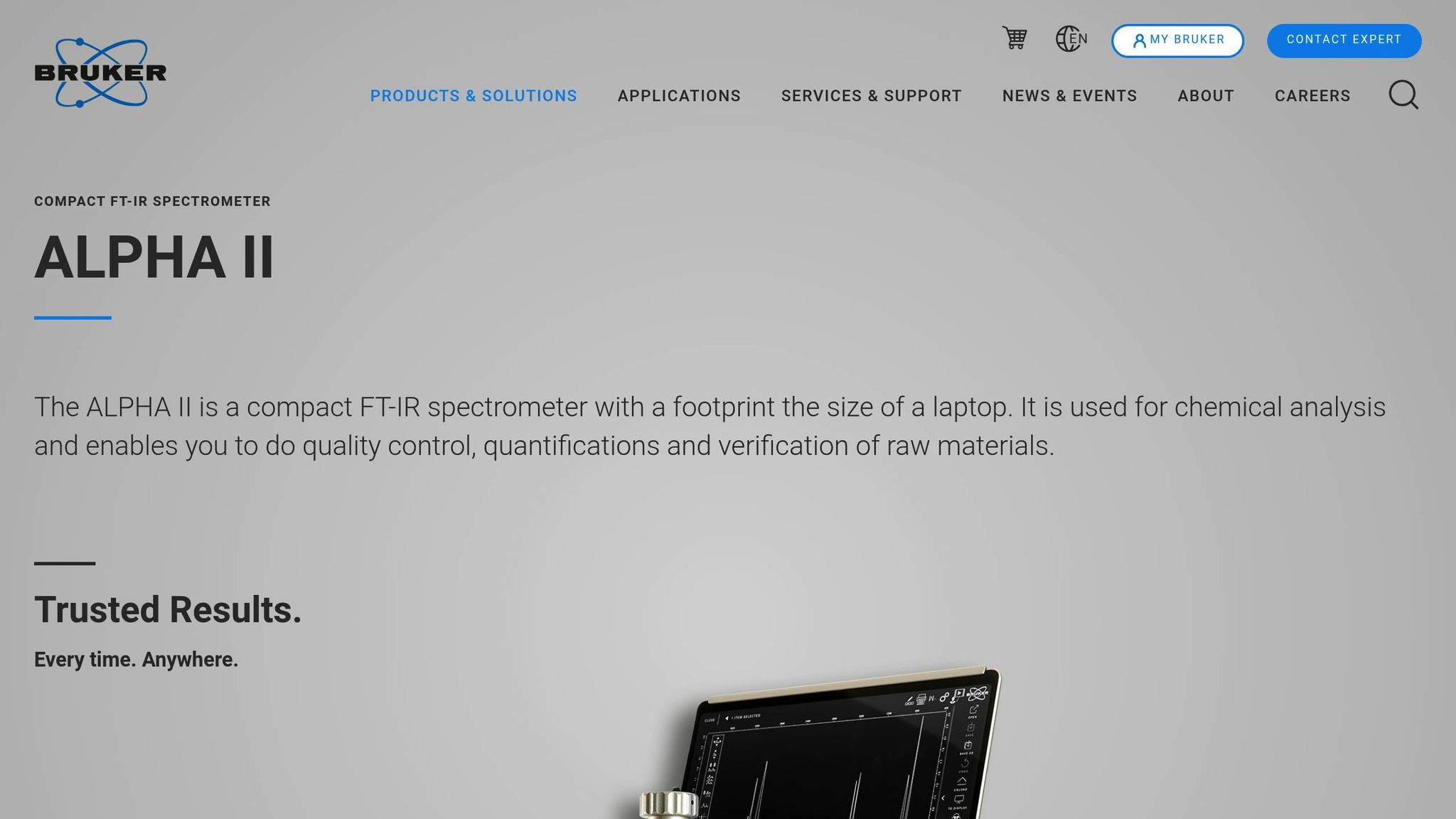
Verification of (Raw) Materials | FT-IR Spectroscopy | Pharmaceuticals ALPHA II
Conclusion: How IR Spectroscopy Ensures Raw Material Quality
Infrared (IR) spectroscopy plays a key role in regulated industries by offering a fast, non-destructive method to identify chemical compounds. By analyzing unique molecular fingerprints, manufacturers can confirm the authenticity of raw materials before production begins.
This technology serves multiple purposes, from ensuring the purity of Active Pharmaceutical Ingredients (APIs) to detecting adulterants in food and verifying the composition of specialty chemicals. Its ability to identify contaminants, even in trace amounts, helps maintain product integrity, safeguard consumer safety, and comply with strict regulatory standards.
Achieving reliable results with IR spectroscopy requires proper setup and ongoing care. Building validated reference libraries, performing regular instrument calibration, and following clear operational protocols are essential steps. Consistent performance checks further ensure confidence during regulatory inspections and audits, creating a dependable quality control framework. This reliability also strengthens relationships with suppliers.
Collaborating with suppliers enhances the efficiency of quality assurance processes. When suppliers provide detailed spectral data alongside certificates of analysis, verifying incoming materials becomes faster and more dependable. This partnership reduces testing time, minimizes waste, and streamlines production schedules – all while maintaining high-quality benchmarks.
While the initial investment in IR spectroscopy equipment and training may seem significant, its long-term advantages – like fewer batch failures, better regulatory compliance, and improved product consistency – translate into cost savings and a stronger market reputation. For businesses in regulated sectors, IR spectroscopy is more than just a tool; it’s a cornerstone of sustainable operations and quality assurance.
At Allan Chemical Corporation, IR spectroscopy is integral to maintaining rigorous quality standards. With over 40 years of experience serving regulated industries, Allan Chemical ensures that every raw material stocked and sourced meets strict requirements for authenticity and purity.
Disclaimer: This content is for informational purposes only. Always consult official regulations and qualified professionals before making sourcing or formulation decisions.
FAQs
How does IR spectroscopy help detect trace impurities in raw materials compared to other methods?
Infrared (IR) spectroscopy is an effective method for identifying trace impurities in raw materials. By examining the unique molecular vibrations within a sample, it generates a distinct "molecular fingerprint." This allows for the precise identification of both functional groups and impurities, making it an essential technique for maintaining the quality and consistency of materials in highly regulated industries.
Unlike methods such as near-infrared (NIR) or UV-Vis spectroscopy, IR spectroscopy has the advantage of analyzing samples in their natural state, without the need for extensive preparation. While NIR is more suitable for studying broader interactions in organic and inorganic compounds, IR spectroscopy stands out for its ability to detect trace impurities with remarkable precision. This level of accuracy is especially important for meeting the strict standards in industries like pharmaceuticals, cosmetics, and food production.
How can the challenges of analyzing complex mixtures or opaque samples with IR spectroscopy be addressed?
Breaking down complex mixtures with IR spectroscopy can be tricky, but methods like spectral subtraction and spatial separation make it possible to isolate individual components. These approaches are particularly useful for untangling overlapping signals, leading to more precise results.
When working with opaque samples, analysis can be improved by using thinner or more diluted samples. Another effective option is attenuated total reflectance (ATR), a technique that reduces the challenges posed by sample opacity. ATR provides accurate measurements, making it a dependable choice for analyzing tough materials.
How can manufacturers keep their IR spectroscopy equipment accurate and reliable over time?
To keep IR spectroscopy equipment functioning accurately and reliably, manufacturers need to prioritize regular calibration using traceable standards. Routine upkeep, like cleaning optical components and performing calibration checks, is equally important for maintaining consistent performance.
Establishing a strong quality control program is another key step. This should include maintaining controlled environmental conditions and strictly following standard operating procedures. By adhering to these practices, manufacturers can ensure their equipment consistently provides precise and reliable results.


Comments are closed